
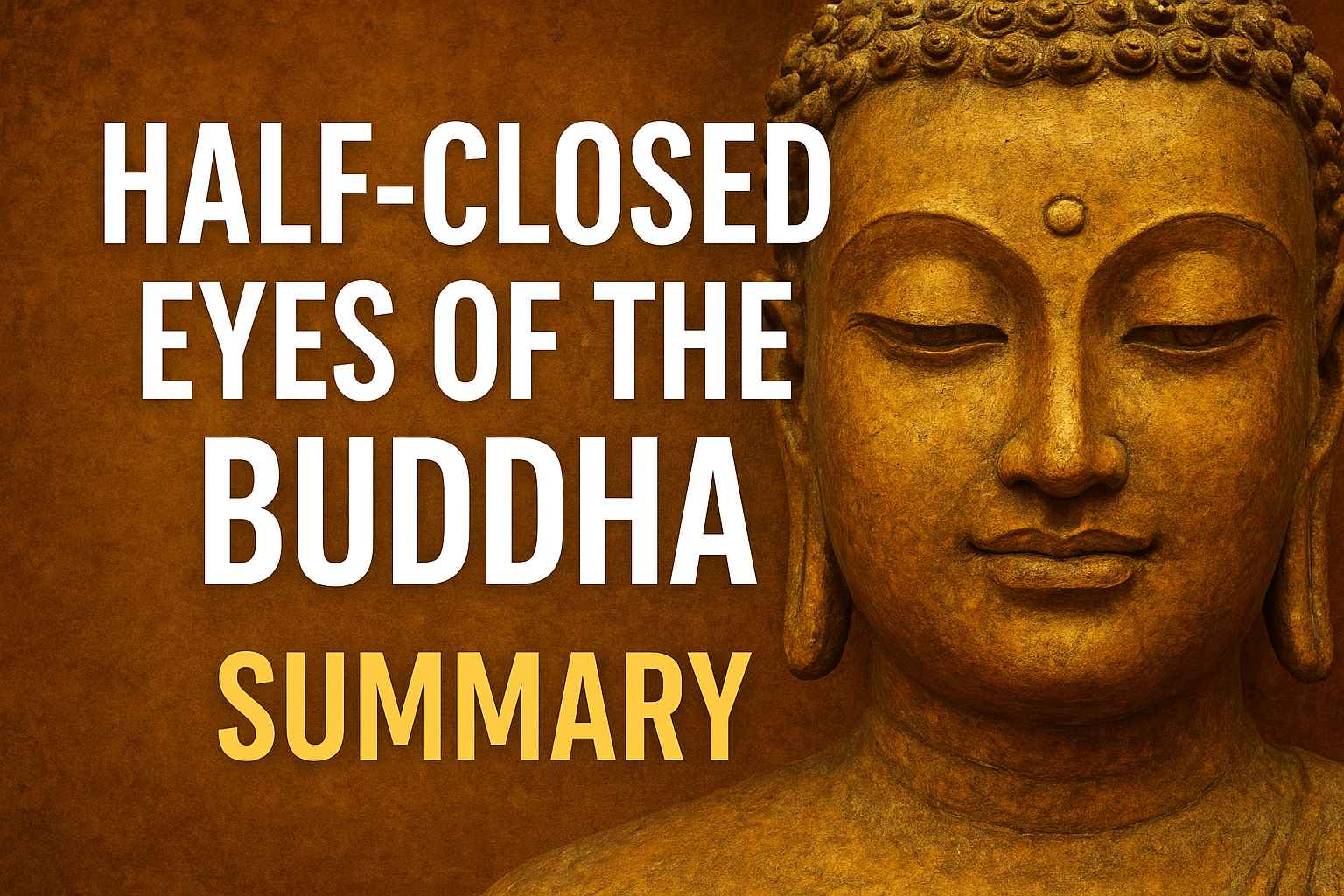
🌄 The Half-Closed Eyes of the Buddha and the Slowly Sinking Sun – Simple Summary, Analysis and Theme
Characters:
-
Tourist Guide (Nepali) – A man who shows Kathmandu to visitors and represents the real life of Nepal.
-
Foreign Tourist (Westerner) – A visitor who deeply admires Nepal’s beauty, culture, and spirituality.
Theme:
-
Cultural beauty of Nepal
-
East vs. West understanding
-
Human suffering and acceptance
-
Spiritual gaze (samyak-drishti)
-
True meaning of life and inner peace
✅ One-Paragraph Exam Summary
“The Half-Closed Eyes of the Buddha and the Slowly Sinking Sun” presents the thoughts of a foreign tourist and a Nepali guide. The tourist admires Nepal’s culture, traditions, smiles, temples, and Buddha’s peaceful eyes. He feels Nepal gives wisdom to the world. But the guide shows him a deeper truth by taking him to a poor farmer’s house where a paralyzed child lives. The child cannot move or speak; only his eyes are alive. These eyes show silent suffering, acceptance, and the true human condition. The guide says these eyes are as meaningful as the Buddha’s half-closed eyes at sunset, representing beauty, pain, peace, and the reality of life.
⭐ Simple Summary
“The Half-Closed Eyes of the Buddha and the Slowly Sinking Sun” by Shankar Lamichhane is a beautiful story that shows Nepal through the eyes of a foreign tourist and a Nepali tourist guide. The story is written in a special style called stream of consciousness, where characters speak their thoughts freely.
The tourist arrives in Kathmandu and immediately falls in love with the green valley, peaceful hills, smiling people, ancient temples, carved windows, and the half-closed eyes of Buddha. He feels that Nepal has a unique calmness that the Western world does not have. He believes Nepal has always given so much to the world—religion, culture, art, statues, scriptures, and wisdom—without expecting anything in return.
The tourist talks about Nepal’s beautiful traditions, old stories, crafts, festivals, food like momos, and the warm smiles of Nepali people. He admires the way different religions—Hinduism and Buddhism—live together peacefully. To him, everything in Nepal feels spiritual and welcoming.
The Nepali guide, however, wants to show the tourist something deeper—something real. So he takes him not only to historical places like Chobhar but also to a poor farmer’s house. There, the tourist meets a small child who has been paralysed by polio. The child cannot speak, walk, move, or even eat properly. Only his eyes are alive.
The guide tells the tourist that these eyes are the “eyes he wanted to see”—eyes that show pure suffering, acceptance, stillness, and silence. The guide says that the child cannot “give or take” anything from the world. Yet he survives quietly, without complaints. His eyes hold a deep truth about life, stronger than the eyes carved on stupas.
The child watches his healthy sister play and crawl. For a moment, the wish to be like her appears in his eyes, but it disappears immediately. His eyes show the end of human development, as if human effort has finally stopped with him. He represents pain that has no words.
Finally, the guide says that these eyes are both beautiful and tragic, just like the sunset reflected in the Buddha’s half-closed eyes. They show acceptance, peace, and the painful reality of life at the same time.
🌟Analysis of the Story:
The story is about how a tourist from the West and a Nepali guide see Nepal differently. The tourist sees beauty, culture, history, smiles, and spirituality. He admires the valley, the temples, the carvings, the stupas, the Buddha’s eyes, and the peaceful lifestyle. He enjoys the food and traditions and believes Nepal has given endless gifts to the world.
The guide, however, wants to show the tourist the real Nepal—not just temples and traditions but also the struggles of ordinary people. He takes him to see a poor family whose little boy is paralyzed by polio. The child cannot do anything—no talking, no moving, no expressing—except through his eyes.
These still, emotionless eyes are the true symbol of Nepal, according to the guide. They show pain, acceptance, silence, and a deep spiritual truth. They are neither hopeful nor hopeless—they simply exist. Just like the Buddha’s half-closed eyes that look calm and peaceful while holding deep meaning within.
In the end, the guide says that the child’s eyes are as beautiful as the setting sun on Buddha’s eyes—a mix of beauty, suffering, and peace. These eyes welcome everyone, build civilizations, and hold the entire story of life.