
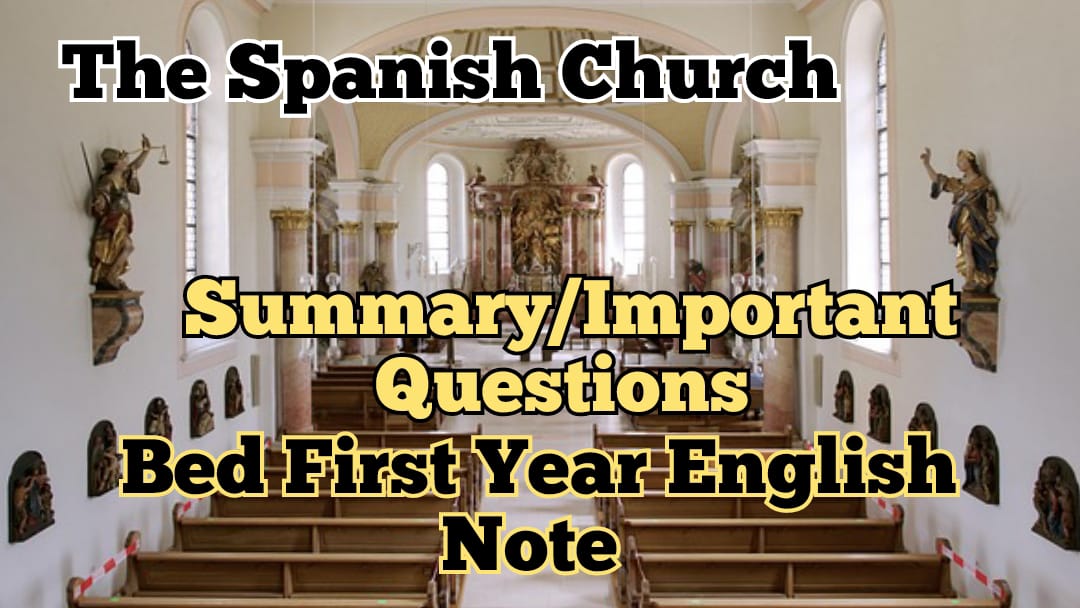
The Spanish Church by Katherine Watson – Full Summary
The Spanish Church by Katherine Watson is a travelogue that captures a unique spiritual experience during her journey to the Spanish town of Portomarin. Following the ancient sacred pilgrimage route, Watson walks under the warm Spanish sun, briefly meeting two Italian cyclists before deciding walking was the better choice. She spends the night with a friend in a modern motel before reaching Portomarin, a reconstructed town where the church is built from the same historic stones as the original.
When she enters the church, Watson immediately feels a deep spiritual connection. Intending to be alone, she unexpectedly encounters a boy inside. Although they are strangers and both foreigners, they communicate without words, connected only by the peaceful silence of the sacred space. This non-verbal exchange makes her feel a sense of familiarity and closeness with him.
After the boy leaves, she rejoins her friends, who ask about her visit. Her simple yet meaningful reply—“It’s good; very comfortable”—reflects her sense of peace and the emotional connection she felt inside the church.
Themes & Significance:
-
The power of silent, non-verbal communication in a spiritual setting.
-
The connection between travel, culture, and personal reflection.
-
The symbolic role of the church as a space for unity beyond language barriers.
Katherine Watson’s experience in The Spanish Church shows how travel can offer not just physical journeys, but also deeply personal and spiritual connections that words cannot fully express.