
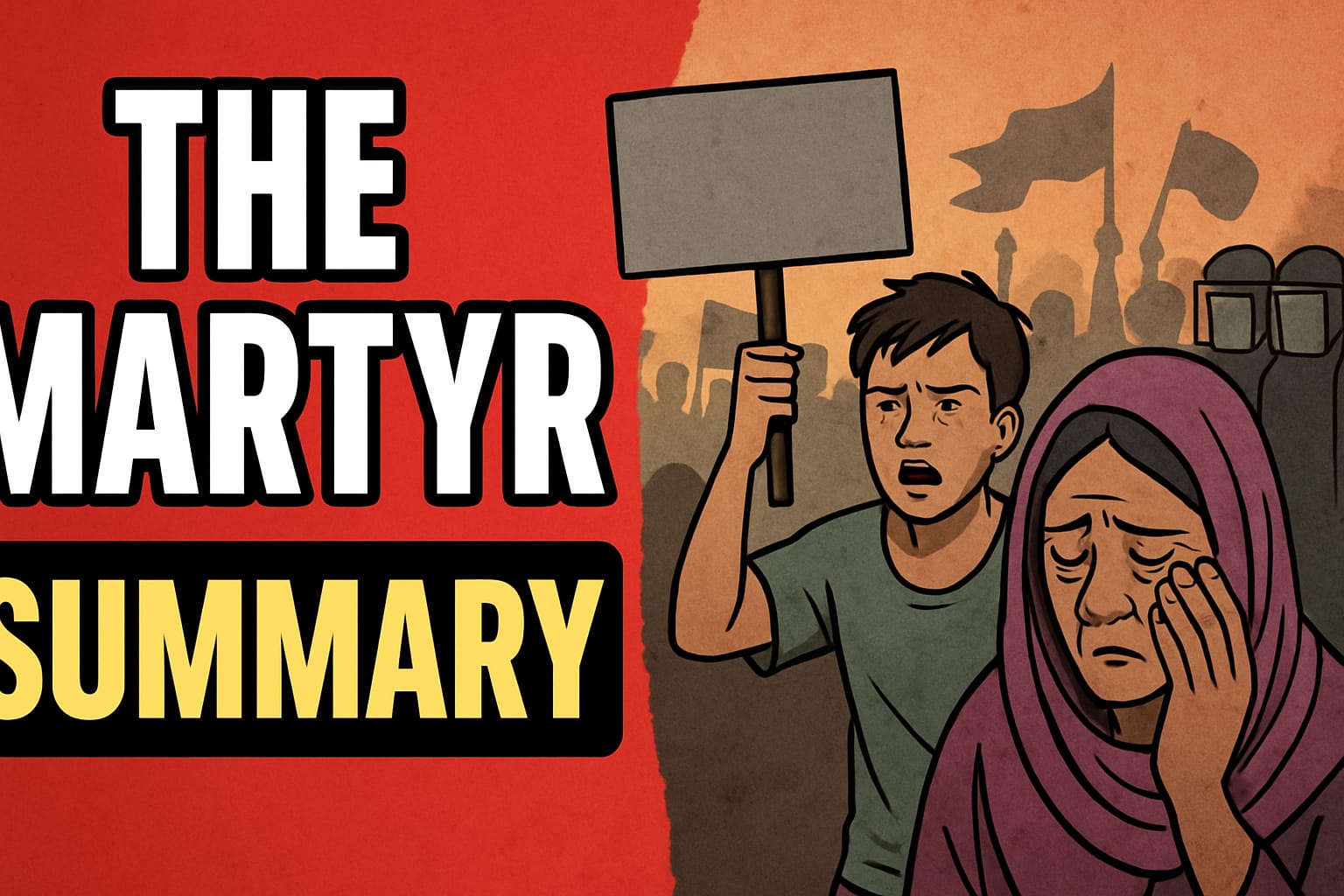
The Martyr Summary – A Story of Sacrifice in the People’s Movement
📘 Introduction – The Martyr Summary
This The Martyr summary tells the story written by V.S. Rai, set during the People’s Movement of 2063 B.S. in Nepal. It is a powerful story of love, sacrifice, and inequality, seen through the eyes of a poor boy and his mother.
👩👦 Main Characters in The Martyr
-
Sunil – A brave young boy who wants to join the people’s protest.
-
Kanchi – Sunil’s mother, a poor widow who tries to protect her only son.
-
Gopichand – A local man who speaks about the real problems of poor people.
📖 The Martyr Summary in Simple Language
Sunil is the son of a martyr who died in an earlier political movement. Since then, his mother Kanchi has raised him alone by working in other people’s houses. They are very poor.
When a new movement starts in 2063 B.S., Sunil wants to join it with his friends. But his mother says no. She is scared of losing him just like she lost her husband. She begs him not to go. But Sunil insists and promises to return home early.
Kanchi has suffered a lot. After marrying a Dalit man, her family never accepted her back. She was left poor and helpless, and even though her husband died for change, nothing changed for the poor like her.
Gopichand, a neighbor, also says that even if the movement wins, the rich will get richer and the poor will stay poor. But Sunil doesn’t listen. He joins the protest.
In the crowd at Ring Road, Kathmandu, Sunil sees people getting beaten by the police. Still, he feels proud and chants with the crowd:
“We want democracy! Down with autocracy!”
Suddenly, there is a loud “bang”. Tear gas fills the air. Sunil falls to the ground and dies. He never returns home. His promise to his mother remains incomplete.
The story ends with a message — the poor keep suffering, even when revolutions succeed.
💬 Moral of The Martyr
This The Martyr summary shows the pain of the poor and how sacrifices often go unnoticed. Even when big political changes happen, people like Sunil and Kanchi remain in suffering. The story reminds us to think about true equality, not just political slogans.