
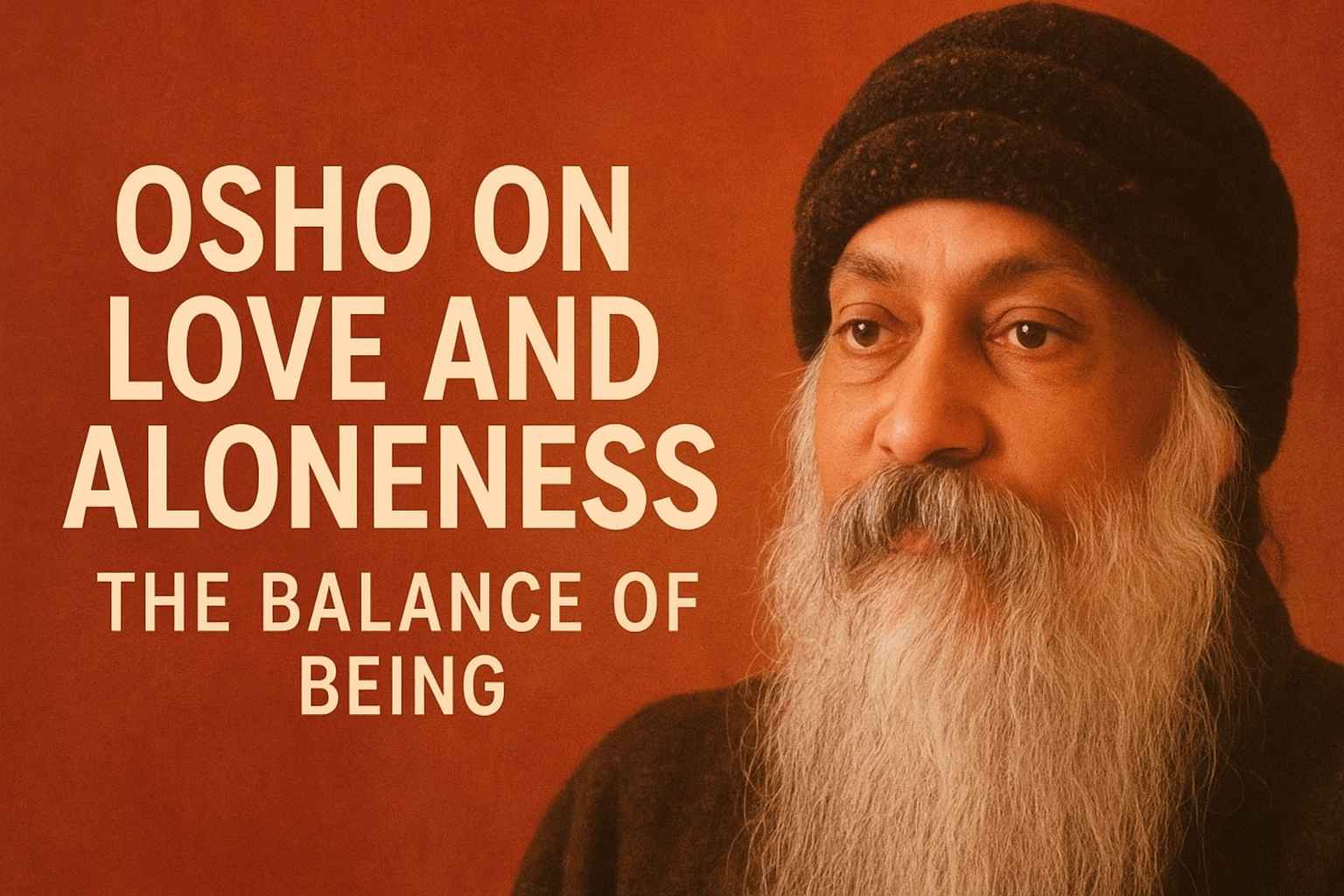
Osho on Love and Aloneness: The Balance of Being
Love and aloneness are often seen as opposing forces, yet Osho, the renowned spiritual teacher, invites us to see them as complementary aspects of life. According to Osho, true love cannot flourish in dependence, and genuine aloneness is the foundation of deep connection. Understanding this balance can transform relationships and inner peace.
The Essence of Love According to Osho
Osho describes love not as possession or attachment but as a celebration of life and another person’s existence. Love is freedom. When you love someone truly, you do not bind them with expectations or control. Instead, you allow them to grow, evolve, and be themselves.
-
Unconditional Love: Osho emphasizes that love must be unconditional. When we expect something in return, it becomes a transaction, not love.
-
Love Without Clinging: Clinging and dependency are forms of fear, not love. True love arises from joy, not neediness.
In Osho’s view, relationships flourish when both individuals are whole and self-aware. Love is not about completing someone but about sharing your completeness.
Aloneness: The Secret to Spiritual Freedom
Aloneness, according to Osho, is not loneliness. Loneliness is a feeling of emptiness or lack, while aloneness is a state of wholeness within oneself.
-
Self-Discovery: Being alone allows you to explore your inner world, understand your emotions, and connect with your true self.
-
Inner Peace: In solitude, you learn to be content without external validation, developing resilience and emotional independence.
Osho teaches that the ability to be alone is the prerequisite for genuine love. If you depend on others for happiness, you are not truly in love—you are in need.
Balancing Love and Aloneness
The true art lies in balancing love and aloneness. Osho often explained that a healthy relationship is one where two individuals come together from a place of wholeness, not from emptiness.
-
Wholeness First: Cultivate your inner world, passions, and spiritual growth.
-
Relationship as Celebration: Approach relationships as sharing, not completing.
-
Freedom Over Possession: Allow space for individuality and personal growth.
When love and aloneness coexist, relationships become enriching rather than binding. Partners support each other’s growth while maintaining their individuality—a spiritual relationship in its purest form.
Conclusion
Osho’s teachings on love and aloneness are a profound guide to modern relationships. Love thrives when it is free from dependency, and true intimacy arises when each person is complete within themselves. By embracing both love and aloneness, we can experience relationships that are not only romantic but deeply spiritual, joyful, and liberating.