
Summary/Analysis of Light My Lucky: BBS Second Year
Introduction
This article presents a clear and easy Light My Lucky summary for BBS Second Year students. The essay studies an advertisement for Lucky Strike Light cigarettes with the slogan “Light My Lucky.” The writers explain how advertisers use puns, metaphors, and tricky warnings to mislead consumers. Through this analysis, the essay shows why it is important to read advertisements critically and not fall for their manipulative messages. This Light My Lucky summary highlights the hidden meanings behind the slogan and how the ad connects smoking with beauty, health, and pleasure while ignoring its dangers.
Long Summary of Light My Lucky
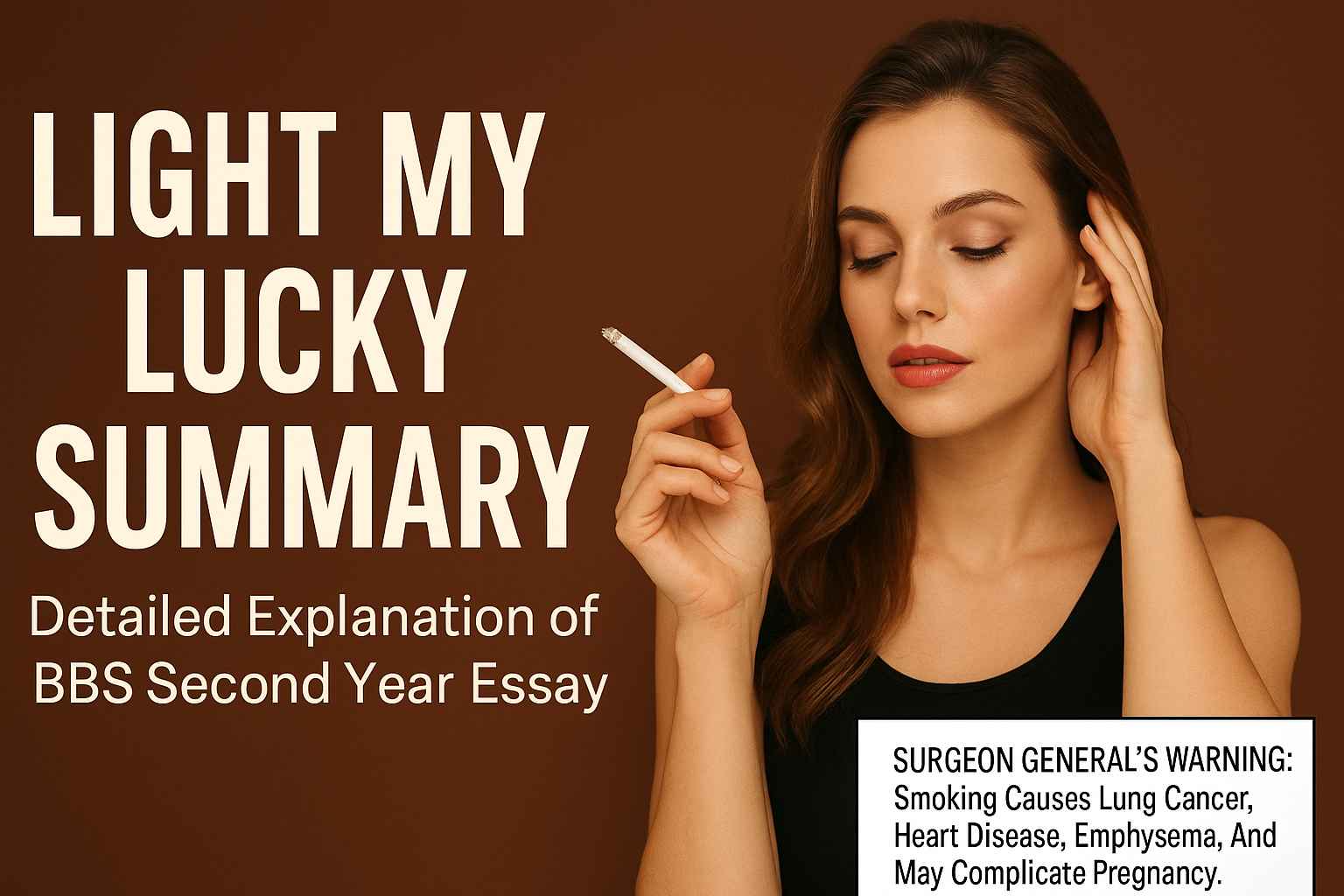
The essay Light My Lucky was written by three professors: R. Scholes from Brown University, N. R. Comley from CUNY, and G. L. Ulmer from Florida. They studied how advertisements work, especially tobacco ads, and how they manipulate people. The essay focuses on an advertisement for Lucky Strike Light cigarettes with the slogan “Light My Lucky.”
In this ad, a beautiful woman poses with a cigarette in her hand. The slogan and the warning label below it seem simple, but the writers show that they carry hidden meanings. The word “light” becomes the center of analysis. It has two different meanings. One meaning of light is fire or burning, which creates a sexual suggestion when connected with the slogan “Light My Lucky.” It metaphorically hints at desire and intimacy. Another meaning of light is “not heavy,” which suggests that the cigarette is safer or contains less nicotine. Both meanings connect smoking with beauty, health, and pleasure. This trick makes the product look attractive even though it is harmful.
The writers also explain how metonymy works in the ad. Metonymy means using one part to represent the whole. In this case, the word light connects to fire, health, and sexual attraction all at once. Advertisers use this clever wordplay to make cigarettes look more appealing than they really are.
The warning label in the ad also plays a tricky role. It only says that pregnant women should avoid smoking. This makes other people think that smoking Lucky Strike Light is fine for them, almost as if it is healthy. In this way, the warning gives a false sense of safety instead of real health advice.
The essay highlights how advertisements never tell the full truth. Ads are not made to inform people but to sell products. They use attractive images, puns, and metaphors to catch attention and convince consumers. That is why the writers argue that people must read advertisements critically. If we do not question ads, we might believe the tricks and harm ourselves. In the case of cigarettes, blind trust in ads can lead to serious health problems.
Through this analysis, the essay shows that Light My Lucky is not just a simple slogan. It is a carefully designed trick that connects smoking with sex, beauty, and health while hiding the dangers. The main message is clear: advertisements brainwash people, so consumers must stay alert and think critically before believing what ads promise.