
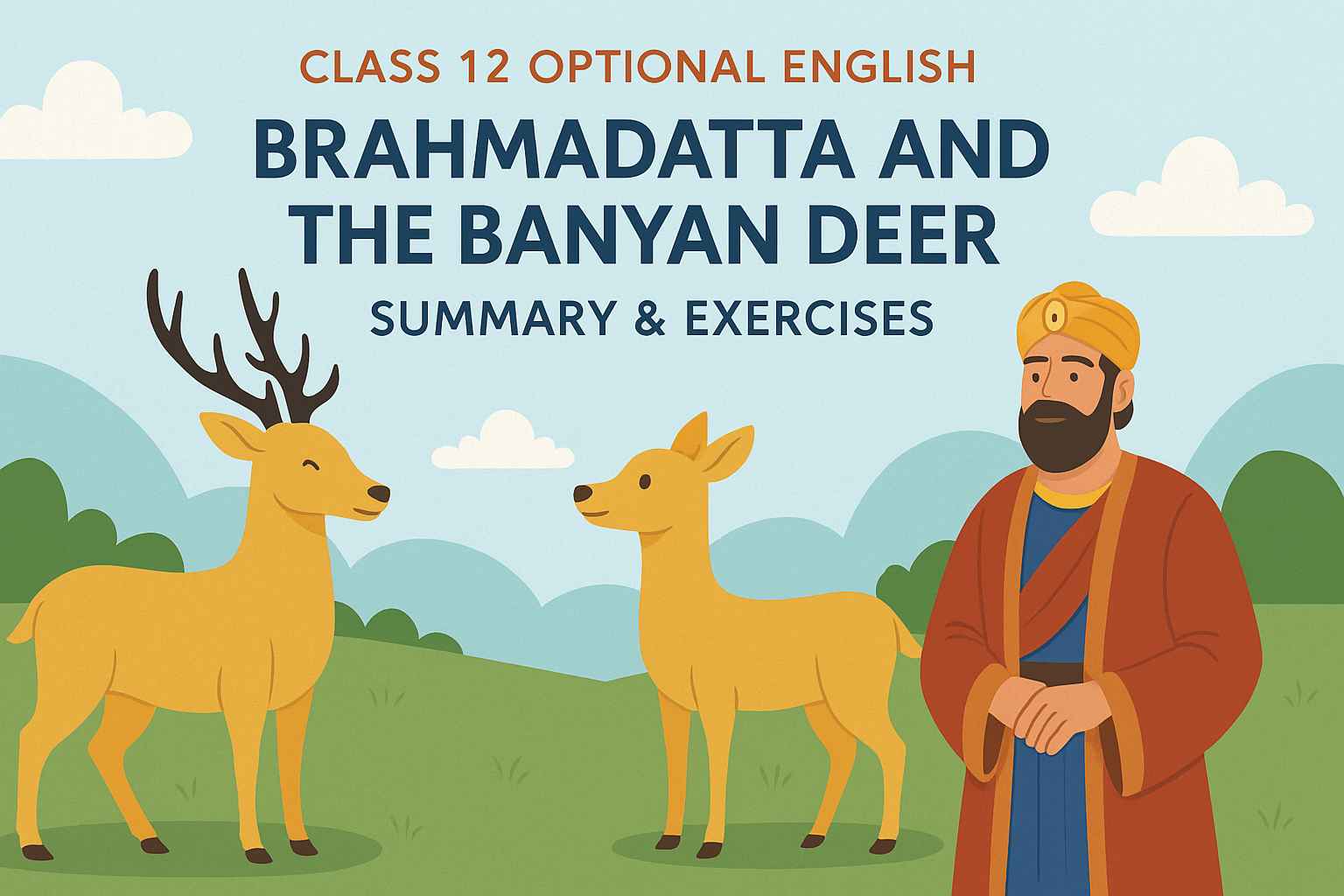
Brahmadatta and the Banyan Deer │ Summary & Exercises
The Story
In a forest near Kashi, a golden deer called King Banyan Deer led 500 deer. Farther away, another golden deer, King Branch Deer, ruled a herd of the same size. Both herds were peaceful, strong, and graceful.
Nearby, King Brahmadatta of Benaras loved hunting and eating meat every day. He forced villagers to join his daily hunts. Consequently, their work suffered, and frustration grew among the people. The villagers decided to find a clever solution to protect themselves and the animals.
The Villagers’ Clever Plan
First, the villagers prepared a royal park. They planted crops, dug water holes, and arranged shelters for the deer. Then, with great care, they drove both herds into the park and closed the gates.
When the king arrived, he was delighted to see so many deer. He immediately noticed the two golden leaders and ordered that they must never be harmed. From that day, the golden deer enjoyed special protection.
Protecting the Herd
Despite the king’s order, hunters sometimes chased the other deer, which caused panic and injuries. To reduce suffering, King Banyan Deer and King Branch Deer made a smart plan. They decided to send one deer to the palace each day for the king. In this way, the rest of the herd could live safely and avoid unnecessary harm.
The Pregnant Doe and King Banyan Deer’s Sacrifice
One day, a pregnant doe faced her turn. She feared leaving her newborn fawn alone. After her king refused her request, she sought help from King Banyan Deer.
With great courage, King Banyan Deer offered himself to go to the palace instead. When the royal cook saw him, he was shocked. Then the king came and listened carefully to the story. He was deeply impressed by the deer’s selfless act and compassion.
From that day forward, King Brahmadatta freed all animals, birds, and fish in his kingdom. The forest became peaceful, and the deer lived happily ever after.
Key Lessons
-
True leadership means caring for others.
-
Kindness and compassion can inspire change.
-
Selfless sacrifice is noble and meaningful.
-
All living beings deserve protection and respect.
Questions and Answers
1. Why did the villagers trap the deer?
The villagers trapped the deer to avoid joining the king’s daily hunts, which disrupted their work and caused stress. By confining the deer in the royal park, they ensured the king could enjoy hunting without needing their help. This plan allowed them to continue farming and running businesses, while the animals could also stay safe, reducing unnecessary suffering.
2. Why were the villagers unhappy with King Brahmadatta?
The king forced villagers to hunt daily, which prevented them from managing their farms and businesses. This practice caused financial loss and frustration. They felt trapped and powerless, forced to participate in cruel hunts. The villagers wanted a way to protect themselves and the animals while ensuring the king’s wishes were met without harming their livelihoods.
3. What agreement did the kings of the deer herds make after being trapped?
King Banyan Deer and King Branch Deer agreed to take turns sending one deer daily to the palace. This prevented stampedes that injured many deer. The plan allowed the majority of the herd to live safely while still fulfilling the king’s hunting desire. The arrangement was fair, organized, and showed the deer’s concern for their community’s well-being.
4. What did the pregnant doe request from her king?
The pregnant doe asked King Branch Deer to postpone her turn because her newborn fawn could not survive alone. She wanted to protect her baby until it was old enough to live independently. This plea highlighted her maternal love and responsibility, showing that care for the vulnerable is a core value in the animal kingdom.
5. How did King Banyan Deer help the mother doe?
King Banyan Deer decided to take the mother doe’s place at the palace. By doing so, he protected both the mother and her fawn. His action demonstrated bravery, wisdom, and selflessness. The king witnessed the deer’s courage, realized the value of compassion, and eventually freed all animals. This act highlights the importance of protecting the vulnerable even at personal risk.
6. What lesson did King Banyan Deer teach King Brahmadatta?
King Banyan Deer taught the king about empathy, responsibility, and moral courage. The king learned that leadership is not only about personal desires but also about protecting and caring for others. Through the deer’s actions, he understood the importance of compassion and decided to stop hunting and protect all living beings in his kingdom.
7. How did the king free all the animals, birds, and fish?
The king freed all living creatures after witnessing King Banyan Deer’s courage and selflessness. The deer’s willingness to risk his life to save the mother doe and her fawn inspired the king to change. He realized that compassion and kindness are more important than pleasure from hunting. From then on, all animals, birds, and fish lived safely in the kingdom.
8. Why is this story called an ancient tale?
This story comes from the Jataka tales, a collection of Buddhist stories. Ancient tales often use animals and humans to teach moral lessons. ‘Brahmadatta and the Banyan Deer’ teaches values such as compassion, sacrifice, and responsible leadership, making it a timeless story with lessons that are still relevant today.
9. What is the moral of the story?
The story teaches that leaders must protect and care for their subjects. It also emphasizes kindness, empathy, and selflessness for all living beings. Those who act with compassion inspire others and create a peaceful world. Sacrifice and courage for the well-being of others are central themes, highlighting how small acts of goodness can lead to big positive changes.
10. Why was Buddha born as a deer in this story?
The Buddha took the form of a deer to teach humans about non-violence, compassion, and kindness. By showing care and courage through the deer, the story conveys important life lessons. It encourages people to protect the weak, act selflessly, and foster harmony in the world. The deer symbolizes moral courage and the spirit of empathy that Buddha wanted humans to follow.
11. How did King Banyan Deer’s action change King Brahmadatta’s attitude?
King Banyan Deer’s bravery inspired King Brahmadatta to rethink his actions. The deer’s willingness to risk his own life to save others showed the king that hunting for pleasure caused unnecessary suffering. As a result, the king became compassionate, decided to stop hunting, and promised to protect all creatures. This change demonstrates how selfless acts can influence others and create positive, lasting impact.
12. What message does the story give about courage and sacrifice?
The story teaches that true courage and sacrifice involve helping others, even at personal risk. King Banyan Deer acted selflessly to protect the mother doe and her fawn. His bravery not only saved lives but also inspired the king to change. The tale shows that selflessness and moral courage can bring peace, protect the vulnerable, and encourage a world guided by empathy and kindness.