
• Home
  • All level Notes
    • Class 11
      • Class 11 Chemistry
      • Class 11 Physics
      • Class 11 Account
      • Class 11 Computer Science Note
      • Class 11 Compulsory Nepali
      • Class 11 Compulsory English
        • Model Question: Class 11 English
        • Class 11 English Grammar Solution
        • Class 11 English Chapterwise Solution
      • Class 11 Social Study and Life Skill Note
      • Class 11 Nepali
    • Class 12
      • 12 Nepali
        • Class 12 Nepali Note
        • Nepali Model Question
        • Class 12 Compulsory Nepali Pdf Book
      • 12 English
        • 12 English Chapterwise Question Ans
        • Class 12 English Summary
        • Class 12 C English Grammar Solution
      • 12 Model Questions
      • 12 Major English
      • 12 Social Study and Life Skill
      • 12 Computer Science
      • 12 Economics
      • 12 Marketing
    • BBS
    • B.Ed.
      • Bed First Year
    • MBS
      • MBS First Sem Model Question TU
      • MBS Notes
      • MBS Thesis (TU) Sample
      • Mbs Second Sem Question Paper
      • Mbs Third Sem Question Paper
      • MBS 4th Sem Question
  • Results
  • Pro Student
  • Study
    • Unknown Facts
    • Abroad Study
      • Australia
      • America
    • IELTS
      • Listening
        • IELTS Listening Overview
        • IELTS Listening Practice Tests
        • IELTS Listening Question Types
        • IELTS Listening Resources
        • IELTS Listening Tips & Strategies
      • Speaking
        • Speaking Test Overview
        • Speaking Topics & Questions
        • Speaking Vocabulary
        • Sample Answers
        • Practice Resources
        • Tips & Strategies
      • Reading
      • Writing
      • Grammar for IELTS
      • Vocabulary for IELTS
      • Boost Ielts Score
  • DV 2027 Update
  • Finance
    • Global Finance
    • Nepali Finance
  • Wisdom
  • Blog

Subscribe to Updates

Get the latest creative news from FooBar about art, design and business.

What's Hot

Scientific Research is a Token of Humankind’s Survival: Summary and Exercise Solution: Class 11 English

November 28, 2025

THE BULL – SUMMARY and Important Question Ans

November 26, 2025

Facing Death – Summary and Question Answer: Class 12 English

November 26, 2025
Facebook Twitter Instagram
Your All Notes
  • Home
  • All level Notes
    • Class 11
      • Class 11 Chemistry
      • Class 11 Physics
      • Class 11 Account
      • Class 11 Computer Science Note
      • Class 11 Compulsory Nepali
      • Class 11 Compulsory English
        • Model Question: Class 11 English
        • Class 11 English Grammar Solution
        • Class 11 English Chapterwise Solution
      • Class 11 Social Study and Life Skill Note
      • Class 11 Nepali
    • Class 12
      • 12 Nepali
        • Class 12 Nepali Note
        • Nepali Model Question
        • Class 12 Compulsory Nepali Pdf Book
      • 12 English
        • 12 English Chapterwise Question Ans
        • Class 12 English Summary
        • Class 12 C English Grammar Solution
      • 12 Model Questions
      • 12 Major English
      • 12 Social Study and Life Skill
      • 12 Computer Science
      • 12 Economics
      • 12 Marketing
    • BBS
    • B.Ed.
      • Bed First Year
    • MBS
      • MBS First Sem Model Question TU
      • MBS Notes
      • MBS Thesis (TU) Sample
      • Mbs Second Sem Question Paper
      • Mbs Third Sem Question Paper
      • MBS 4th Sem Question
  • Results
  • Pro Student
  • Study
    • Unknown Facts
    • Abroad Study
      • Australia
      • America
    • IELTS
      • Listening
        • IELTS Listening Overview
        • IELTS Listening Practice Tests
        • IELTS Listening Question Types
        • IELTS Listening Resources
        • IELTS Listening Tips & Strategies
      • Speaking
        • Speaking Test Overview
        • Speaking Topics & Questions
        • Speaking Vocabulary
        • Sample Answers
        • Practice Resources
        • Tips & Strategies
      • Reading
      • Writing
      • Grammar for IELTS
      • Vocabulary for IELTS
      • Boost Ielts Score
  • DV 2027 Update
  • Finance
    • Global Finance
    • Nepali Finance
  • Wisdom
  • Blog
Your All Notes
Home » BBS Third Year Taxation Notes: English and Nepali
BBS Third Taxation

BBS Third Year Taxation Notes: English and Nepali

By Your All NotesSeptember 19, 2023No Comments7 Mins Read
Facebook Twitter Pinterest LinkedIn Tumblr Email
Share
Facebook Twitter LinkedIn Pinterest Email

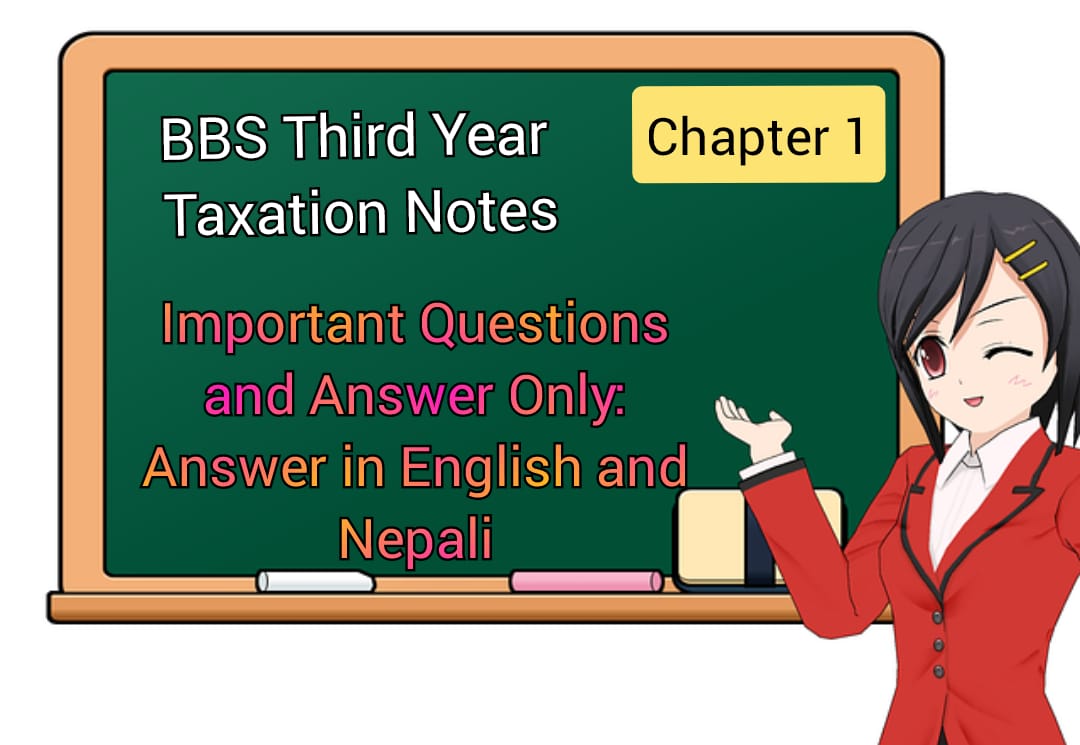
BBS Third Year Taxation Notes

Chapter 1

Important Questions and Answer Only:

Answer in English and Nepali

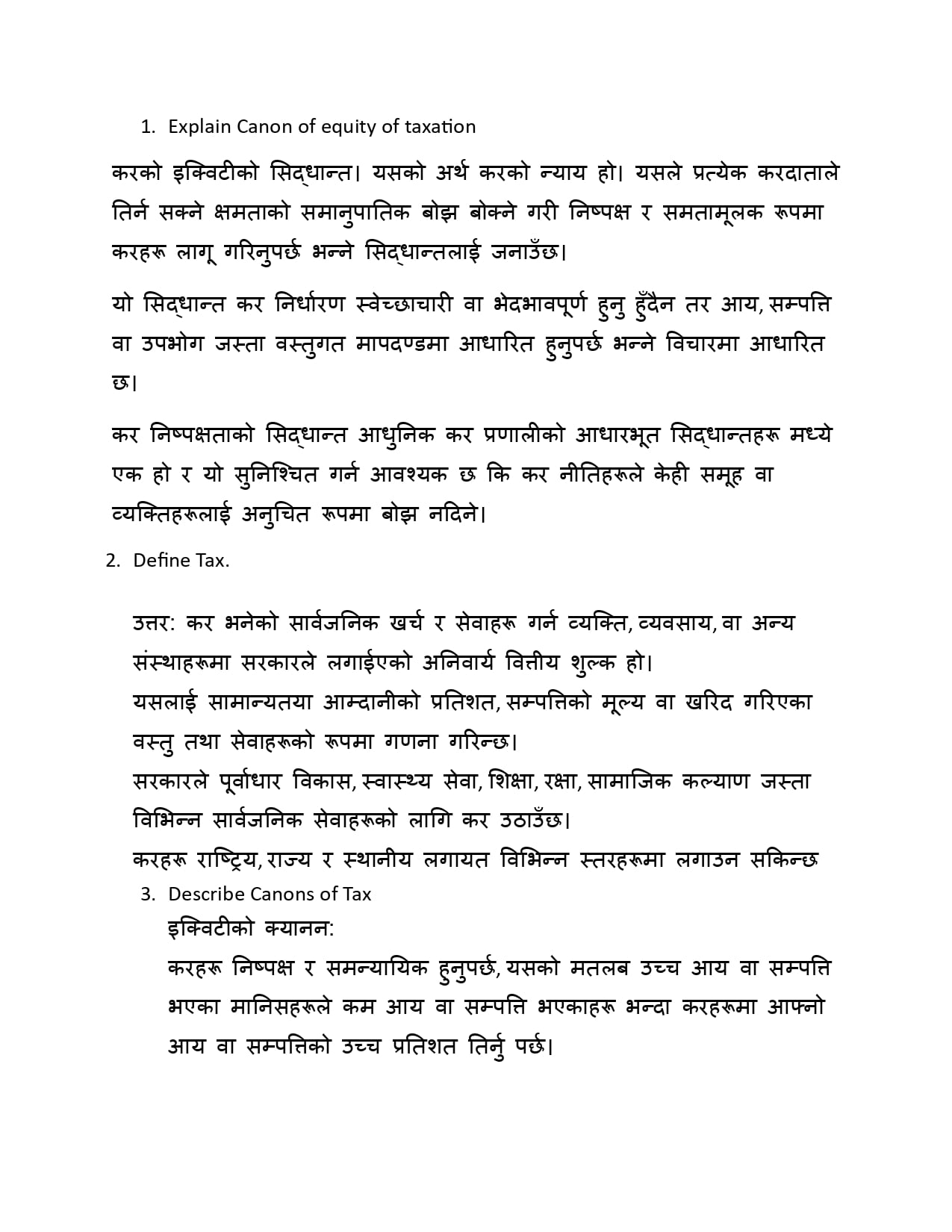
  1. Explain Canon of equity of taxation

Answer: The canon of equity of taxation. It means justice of tax. It refers to the principle that taxes must be applied in a fair and equitable manner, with each taxpayer bearing a burden proportional to their ability to pay.

This principle is based on the idea that taxation should not be arbitrary or discriminatory but should be based on objective criteria such as income, wealth or consumption.

The principle of tax fairness is one of the fundamental principles of the modern tax system and is essential to ensure that tax policies do not unfairly burden certain groups or individuals.

  1. Define Tax.

Answer: A tax is a mandatory financial charge or levy imposed by a government on individuals, businesses, or other organizations to finance public spending and services.

It is usually calculated as a percentage of income, value of assets or goods and services purchased.

The government collects taxes to fund various public services such as infrastructure development, health care, education, defense, and social welfare programs.

Taxes can be levied at different levels, including national, state and local, and can be imposed on different sources of income or wealth, such as income taxes, property taxes , sales tax or corporate tax.
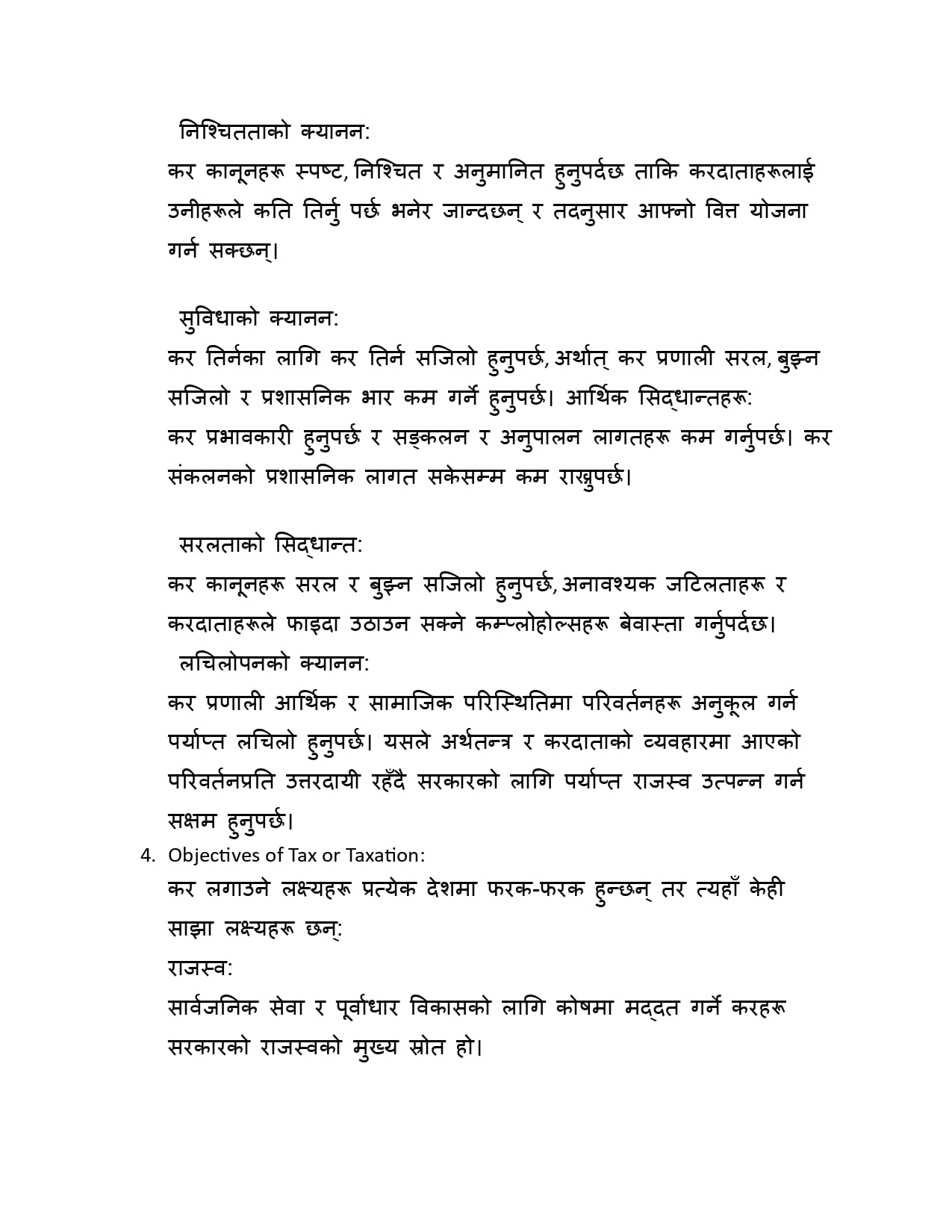
  1. Describe Canons of Tax

Canon of Equity:

Taxes must be fair and equitable, meaning that people with higher income or assets must pay a higher percentage of their income or assets in taxes than those with lower income or assets.

 Canon of certainty:

Tax laws must be clear, certain and predictable so  taxpayers know how much they have to pay and can plan their finances accordingly.

 Canon of Convenience:

Taxes must be easy for taxpayers to pay, meaning  the tax system must be simple, easy to understand and minimize administrative burden. Economic principles:

Taxation must be efficient and minimize  collection and compliance costs. The administrative costs of tax collection must be kept as low as possible.

 Canon of simplicity:

Tax laws need to be simple and easy to understand, avoiding unnecessary complications and loopholes that taxpayers can take advantage of.

 Canon of Flexibility:

The tax system must be flexible enough to adapt to changes in economic and social conditions. It must be able to generate enough revenue for the government while remaining responsive to changes in the economy and taxpayer behavior. 

  1. Objectives of Tax or Taxation:

The goals of taxation are different in each country  but there are some common goals including:

Generate revenue:

Taxes are the main source of revenue for governments, helping to fund public services and infrastructure development.

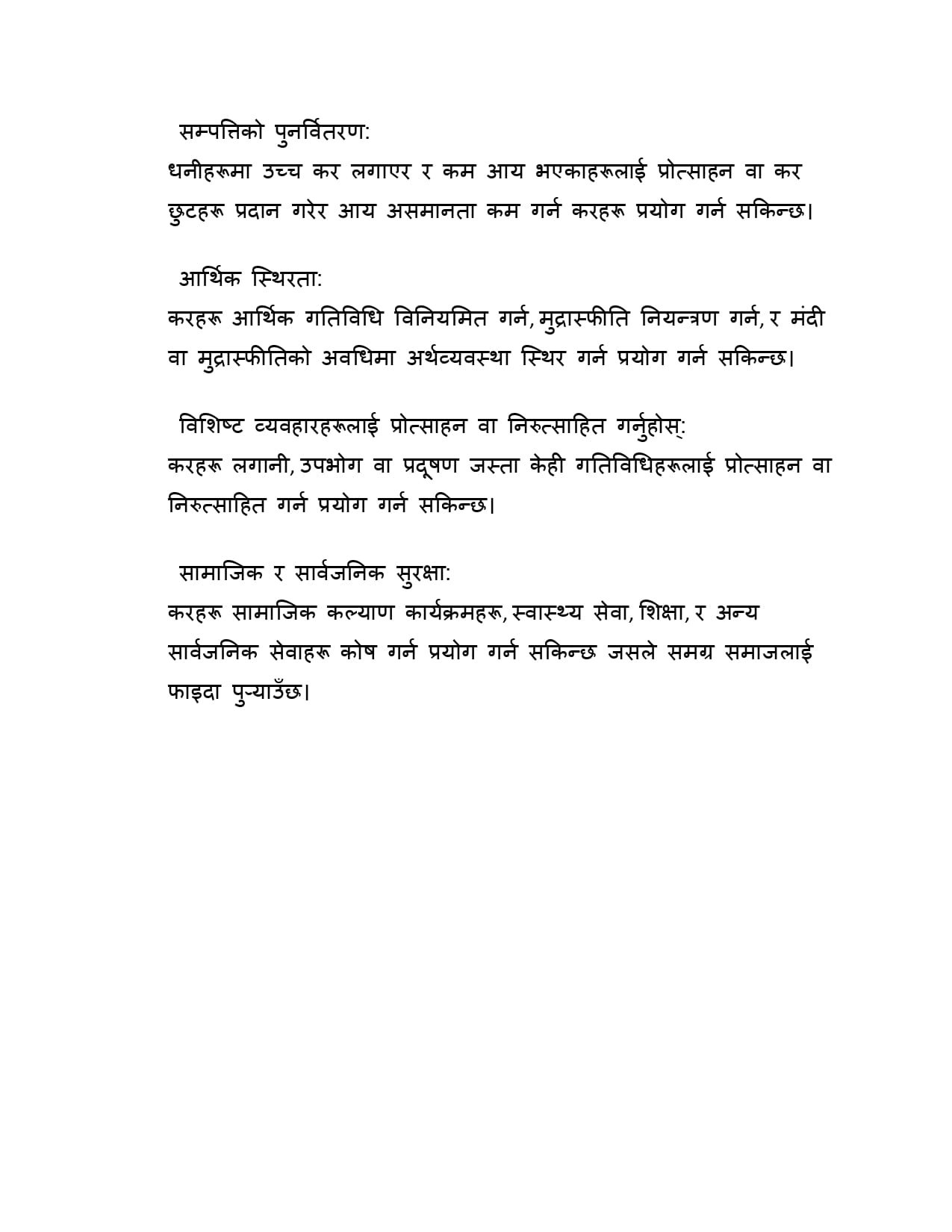
 Redistribution of wealth:

Taxes can be used to reduce income inequality by imposing higher taxes on the rich and providing incentives or tax breaks for low-income earners.

 Economic stability:

Taxes can be used to regulate economic activity, control inflation, and stabilize the economy during periods of recession or inflation.

 Encourage or discourage specific behaviors:

Taxes can be used to encourage or discourage certain activities such as investment, consumption or pollution.

 Social and public protection:

Taxes can be used to fund social welfare programs, health care, education, and other public services that benefit society as a whole.
  1. Sources of Government Financing

Public financing refers to the different ways  governments generate revenue to fund their activities and programs. Here are some common sources of government funding:

Tax:

The government collects taxes from individuals, businesses, and other organizations to fund their operations. This includes income taxes, corporate taxes, sales taxes, property taxes, and many other forms of taxes.

 Get a loan:

The government can borrow money by issuing bonds or borrowing capital from national or international financial institutions. These loans are usually repaid with interest over a certain period of time. Fees and charges:

Governments may charge fees for specific services they provide, such as license fees, tolls, permits, fines, and user fees for public utilities or transportation services .

 Subsidies and support:

Governments often receive grants and aid from other governments, international organizations, or non-profit organizations to support specific projects or initiatives.

 Revenue from natural resources:

Governments can generate revenue through the extraction and sale of natural resources such as oil, gas, minerals or timber.

 Privatization:

The government can raise funds by selling state-owned assets or enterprises to private entities.

 Print money:

In special cases, governments can print money, but this can lead to inflation and is not generally  considered a sustainable source of finance.

  1. Define direct and Indirect Tax

Direct taxes are taxes that are levied directly on individuals or organizations and cannot be transferred to other individuals or organizations. This means that the tax burden  falls directly on the taxpayer, who is responsible for paying the tax.

Examples of direct taxes include income tax, wealth tax, and wealth tax.

 On the other hand, indirect taxes are taxes levied on the production, sale or consumption of goods and services. Unlike direct taxes, the burden of indirect taxes can be transferred from the individual or organization that originally paid the tax to another person.

For example, when a business pays  sales tax on a product, it can shift the tax burden to  customers by increasing the price of the product. Examples of indirect taxes include sales tax, value-added tax (VAT), excise taxes, and customs duties.
  1. Advantages and Disadvantages of Direct and Indirect Tax

Advantages of direct taxes:

Justice:

Direct taxes are often progressive, meaning people with higher incomes pay a higher percentage of their income in taxes. This helps  redistribute wealth and promote social justice.

Simplicity:

Direct taxes are relatively easy to understand and calculate. Individuals and businesses can easily determine the amount of tax they owe based on their income or profits.

Transparent:

Direct taxes are visible to taxpayers as they are deducted directly  from their income or profits. This helps  promote transparency and accountability in the tax system.

Disadvantages of direct taxes:

Economic impact:

Direct taxes can have a negative impact on economic growth and investment. Higher tax rates on income or profits may discourage individuals and businesses from working harder or investing in new businesses.

Not paying taxes:

Direct taxes are more susceptible to tax evasion because individuals and businesses may attempt to hide their income or manipulate  financial statements to reduce their tax liability.

Management costs:

Collecting and administering direct taxes can be costly for tax authorities. This requires a large amount of resources and manpower to ensure compliance and enforcement of tax laws.

Advantages of indirect taxes:

Simplicity:

Indirect taxes are often easier to manage than direct taxes. They are often levied on goods and services at the point of sale, making them easier for tax authorities to collect and control.

Income stability:

Indirect taxes provide a stable source of revenue for the government. Because they are often applied to essential goods and services, they create a continuous revenue stream  regardless of economic fluctuations.  Consumption control:

Indirect taxes can be used as a tool to control the consumption of certain goods or services. By imposing higher taxes on products such as cigarettes or alcohol, governments can limit consumption and promote public health.

Disadvantages of indirect taxes:

Regression:

Indirect taxes tend to be regressive, meaning people with low incomes pay a higher tax rate on their income. This could worsen income inequality and place a greater burden on low-income households.

Hidden costs:

Indirect taxes are often built into the price of goods and services, making them difficult for consumers to notice. This can lead to a lack of transparency and perception of the actual tax burden.

Inefficiency:

Indirect taxes can create market distortions and inefficiencies. For example, they may discourage certain economic activities or favor particular sectors, leading to misallocation of resources.

  1. Describe canon of economy in Taxation

This rule implies that the cost of  tax collection should be as minimal as possible. Any tax that results in high administrative costs, unusual delays in assessment and high tax collection  should be completely avoided. Canon is convenient.

Post Views: 15,158
BBS Third Year Taxation Notes: English and Nepali Explain Canon of equity of taxation Taxation Notes:
Share. Facebook Twitter Pinterest LinkedIn Tumblr Email
Your All Notes

Comments are closed.

  • ALL Notes by Classes (512)
  • IELTS (1)
  • Announcements (2)
  • Results (4)
  • Moral Stories (7)
  • Editor's Picks (17)
  • Trending Now (2)
  • TSC Preparation (4)
  • Class 12 Exam Questions 2079 (5)
  • Bed First Year (27)
  • SEE Model Questions (2)
  • English Grammar (4)
  • Ielts Listening (6)
  • Pro Student (9)
  • Class 11 English (1)
  • Class 11 Physics (8)
  • Class 11 Chemistry (4)
  • Australia (7)
  • MBS 4th Sem Question (4)
  • Mbs Second Sem Question Paper (2)
  • Mbs Third Sem Question Paper (1)
  • 12 Computer Science (2)
  • 12 Marketing (5)
  • 12 Economics (8)
  • 11 Economics (4)
  • 11 Botany (1)
  • Speaking Test Overview (1)
  • Speaking Topics & Questions (1)
  • Sample Answers (2)
  • Tips & Strategies (1)
  • Speaking Vocabulary (1)
  • America (2)
  • DV 2027 Update (16)
  • Nepali Finance (3)
  • Global Finance (2)
  • Blog (11)
  • Wisdom (4)
  • Unknown Facts (2)

Recent Notes
  • Scientific Research is a Token of Humankind’s Survival: Summary and Exercise Solution: Class 11 English
  • THE BULL – SUMMARY and Important Question Ans
  • Facing Death – Summary and Question Answer: Class 12 English
  • Brahmadatta and the Banyan Deer: Class 12 Optional English: Summary & Exercises
  • King Odin’s Wisdom – Summary & Exercise Solutions | Class 12 Major English (NEB)
  • DV Lottery 2027 Entry Period Changes Announced | Official Update by U.S. Department of State
  • DV Lottery 2027 Official Dates and Entry Period Explained
Categories
Don't Miss
Class 11 English Chapterwise Question Answer

Scientific Research is a Token of Humankind’s Survival: Summary and Exercise Solution: Class 11 English

By Your All NotesNovember 28, 20250

Summary “Scientific Research is a Token of Humankind’s Survival” by Vladimir Keilis-Borok explains why science…

THE BULL – SUMMARY and Important Question Ans

November 26, 2025

Facing Death – Summary and Question Answer: Class 12 English

November 26, 2025

Brahmadatta and the Banyan Deer: Class 12 Optional English: Summary & Exercises

November 20, 2025
Our Picks

Scientific Research is a Token of Humankind’s Survival: Summary and Exercise Solution: Class 11 English

November 28, 2025

THE BULL – SUMMARY and Important Question Ans

November 26, 2025

Facing Death – Summary and Question Answer: Class 12 English

November 26, 2025

Brahmadatta and the Banyan Deer: Class 12 Optional English: Summary & Exercises

November 20, 2025
About Us
About Us

We help you with Notes and Important questions related to the English Subject. We have all the new notes from highly qualified teachers and are loved by hundreds of students all over the world. You can also help us improve our post and if you are interested to work with us you are welcome to the team
We're accepting new partnerships right now.

Our Picks

Scientific Research is a Token of Humankind’s Survival: Summary and Exercise Solution: Class 11 English

November 28, 2025

THE BULL – SUMMARY and Important Question Ans

November 26, 2025

Facing Death – Summary and Question Answer: Class 12 English

November 26, 2025

Brahmadatta and the Banyan Deer: Class 12 Optional English: Summary & Exercises

November 20, 2025
Quick Links
Class 11ㅤ Class 12ㅤ BBSㅤ More Classㅤ
Facebook
  • Home
  • All level Notes
    • Class 11
      • Class 11 Chemistry
      • Class 11 Physics
      • Class 11 Account
      • Class 11 Computer Science Note
      • Class 11 Compulsory Nepali
      • Class 11 Compulsory English
        • Model Question: Class 11 English
        • Class 11 English Grammar Solution
        • Class 11 English Chapterwise Solution
      • Class 11 Social Study and Life Skill Note
      • Class 11 Nepali
    • Class 12
      • 12 Nepali
        • Class 12 Nepali Note
        • Nepali Model Question
        • Class 12 Compulsory Nepali Pdf Book
      • 12 English
        • 12 English Chapterwise Question Ans
        • Class 12 English Summary
        • Class 12 C English Grammar Solution
      • 12 Model Questions
      • 12 Major English
      • 12 Social Study and Life Skill
      • 12 Computer Science
      • 12 Economics
      • 12 Marketing
    • BBS
    • B.Ed.
      • Bed First Year
    • MBS
      • MBS First Sem Model Question TU
      • MBS Notes
      • MBS Thesis (TU) Sample
      • Mbs Second Sem Question Paper
      • Mbs Third Sem Question Paper
      • MBS 4th Sem Question
  • Results
  • Pro Student
  • Study
    • Unknown Facts
    • Abroad Study
      • Australia
      • America
    • IELTS
      • Listening
        • IELTS Listening Overview
        • IELTS Listening Practice Tests
        • IELTS Listening Question Types
        • IELTS Listening Resources
        • IELTS Listening Tips & Strategies
      • Speaking
        • Speaking Test Overview
        • Speaking Topics & Questions
        • Speaking Vocabulary
        • Sample Answers
        • Practice Resources
        • Tips & Strategies
      • Reading
      • Writing
      • Grammar for IELTS
      • Vocabulary for IELTS
      • Boost Ielts Score
  • DV 2027 Update
  • Finance
    • Global Finance
    • Nepali Finance
  • Wisdom
  • Blog
© 2025 YourAllNotes.com . Designed by TechSanjal.

Type above and press Enter to search. Press Esc to cancel.

No thanks, I’m not interested.