
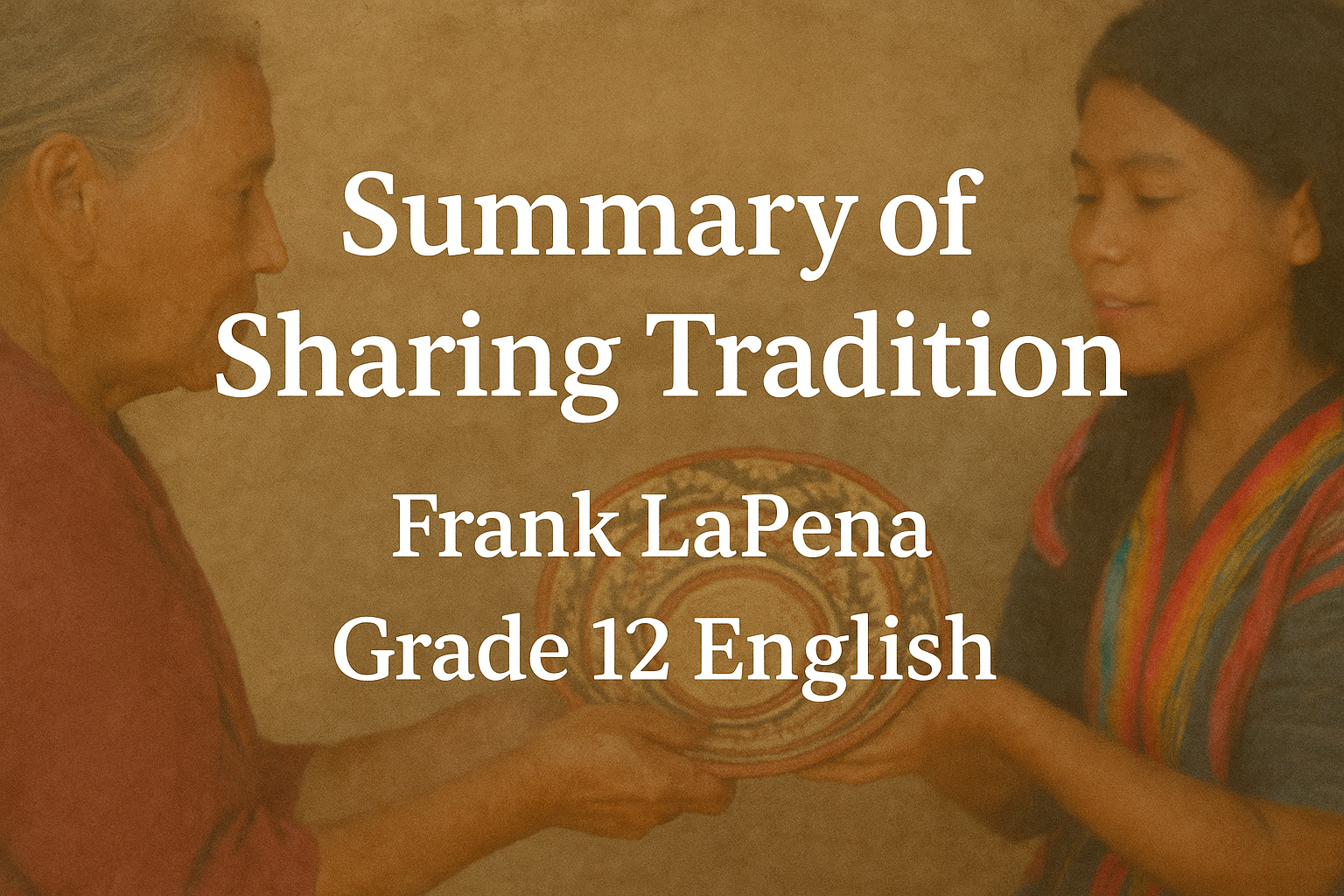
Summary of Sharing Tradition (Frank LaPena | Grade 12 English)
Frank LaPena’s essay Sharing Tradition highlights the importance of oral tradition in preserving cultural identity. Elders pass down wisdom, ceremonies, and values through stories. When they die, young people must step up and continue these responsibilities.
LaPena points out that modern society, with its technology and lifestyle changes, threatens tradition. Many youths regret not listening to their elders earlier. Oral tradition matters because it passes truth directly from one person to another, while written texts often create errors.
For artists, oral tradition inspires symbols, designs, and cultural meaning. LaPena reminds artists to respect tradition, not exploit it for ego. He concludes that every person has a choice: either ignore tradition or respect elders by carrying their legacy forward.
📌 Important Points of Sharing Tradition
- Oral tradition preserves culture, values, and identity.
- Elders play a central role in ceremonies, dances, and daily guidance.
- Each elder creates a unique niche that is hard to replace.
- Younger generations often regret not listening to elders.
- Modern challenges—technology, urban growth, and stress—make it hard to keep traditions.
- Oral tradition allows corrections and truth, unlike printed words that may spread errors.
- Outsiders often misrecord oral knowledge; only insiders keep it accurate.
- Oral tradition supports artists in visualizing stories, designs, and cultural symbols.
- Every person must choose responsibly how to honour elders and carry tradition.
- The essay calls for respect, responsibility, and cultural continuity.