
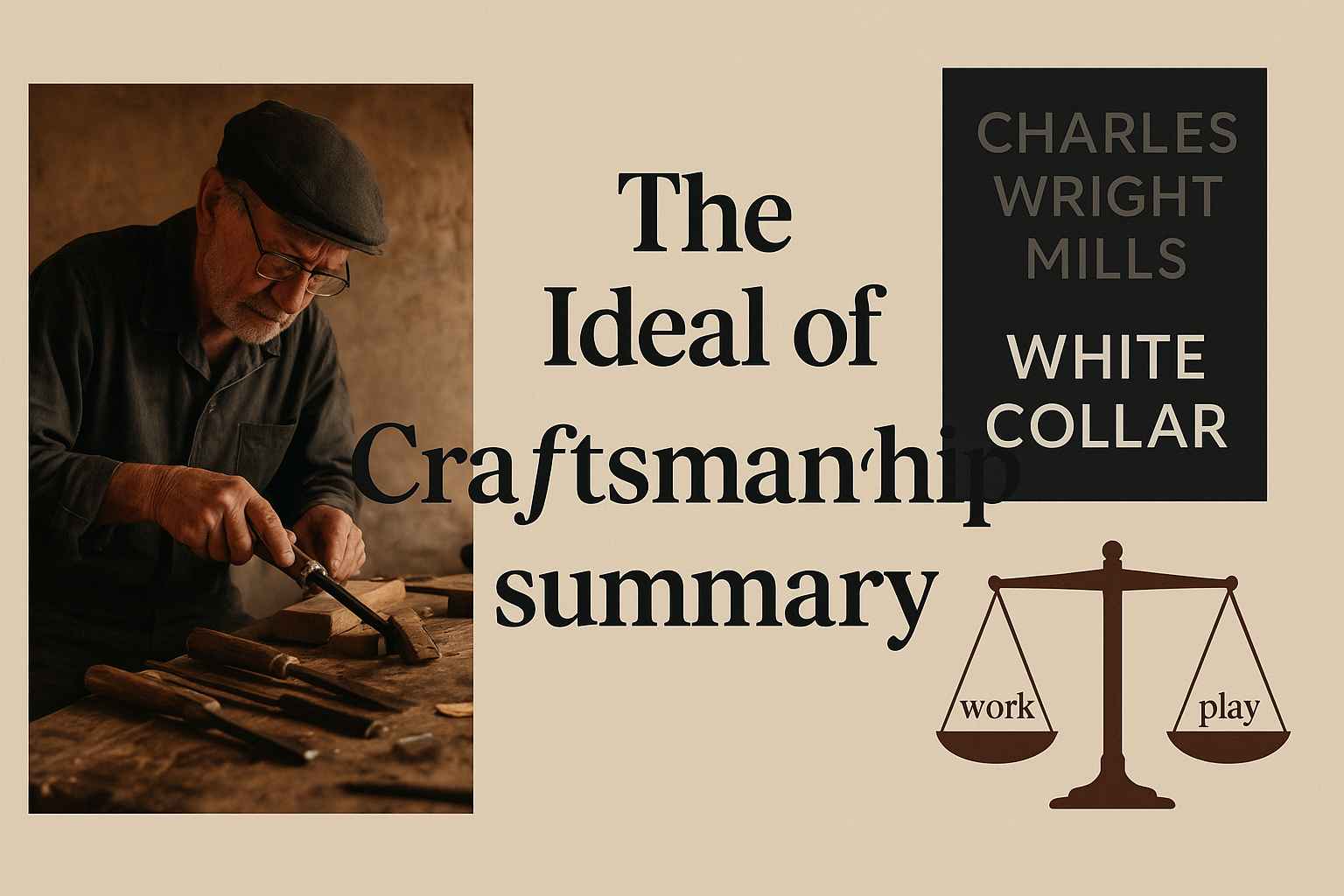
The Ideal of Craftsmanship -Charles Wright Mills
The Ideal of Craftsmanship – Summary in Simple Words
Introduction :
The Ideal of Craftsmanship summary by Charles Wright Mills explores the meaning of true craftsmanship. Mills explains how a craftsman works for joy rather than money, how skill and creativity unite work with culture, and why meditation and originality are essential in artistic creation. This article provides a complete summary, analysis, and important exam questions from the essay.
Charles Wright Mills in his essay “The Ideal of Craftsmanship” defines what it means to be a true craftsman. He explains six main features of craftsmanship and supports his ideas with thoughts from other thinkers like William Morris, Bourget, Henry James, Tilgher, and Gentile. Mills shows that craftsmanship is not just about making things but about the deeper relationship between work, creativity, culture, and human satisfaction.
Key Features of Craftsmanship
1. Work for Pleasure, Not for Money
According to William Morris, a real craftsman works for joy, not just for money, reputation, or salvation. The craftsman first imagines the product in his mind, then creates it with love and spontaneity.  His focus is always on quality and originality. Even if society does not legally accept his work, he still owns it psychologically because his skills, effort, and sweat are part of it.
2. Satisfaction Beyond Ownership
A craftsman gains psychological satisfaction even when the work is not sold or legally recognised. The joy of creation becomes his reward. He sees the whole in the parts, meaning even a small piece reflects the vision of the complete work. This inner satisfaction is deeper than material gain.
3. Freedom and Control in Creation
The craftsman controls his entire process. He creates his own plan, modifies it when needed, and solves problems as they appear. He becomes the master of his art and feels responsible for every step. Even when tools are dull or conditions are difficult, he continues because the struggle makes the result more meaningful.
4. Growth and Development of Skills
Every act of crafting strengthens the craftsman’s skills. The process sharpens his mind, fosters creativity, and helps him grow as a person. Craftsmanship is not only self-development but also cumulative development because skills improve with continuous practice and reflection.
5. Unity of Work, Play, and Culture
Mills stresses that in craftsmanship, work and play are not separate. If work gives joy, it becomes play. Gentile explains that work and culture are inseparable. In crafting, production and consumption blend together because the act of creating itself provides satisfaction. Just as actors enjoy performing, craftsmen enjoy making.
6. Freshness, Meditation, and Calmness
Craftsmen bring freshness and originality even during leisure. If they stop thinking about their art, their rest becomes mere animal rest. Henry James says a craftsman must meditate on his materials to create freshness. Tilgher adds that true peace flows from completed work through a calm and thoughtful mind.
Supporting Ideas from Other Thinkers
-
Bourget: Art is life itself, a mixture of dreamy idleness and intense execution.
-
Henry James: Modern people have lost the ability to pay attention, which is essential for real creation. Without deep focus and observation, neither production nor appreciation of art is possible.
-
Gentile: Work and culture are inseparable.
-
Tilgher: Calmness and peace come from meaningful work.
Mills’ Structure of the Essay
Mills structures his essay by first giving a background on craftsmanship and then presenting six major features. He often uses long sentences with philosophical references. In the conclusion, he combines the ideas of Bourget, Henry James, and Tilgher to highlight the true value of craftsmanship.
Mills’ Assumptions About Human Nature
Mills believes human nature develops through historical and social structures. People’s values, norms, and beliefs guide their creativity. A craftsman creates within cultural boundaries but adds originality and freshness to his work. Human beings, according to Mills, cannot exist apart from the society and history that shape them.
White Collar Work
This essay is from Mills’ book White Collar. White-collar workers are those who usually work in offices, wearing suits and ties. They are educated, skilled, and mostly involved in mental rather than manual labor.
Conclusion – Long Summary
Mills’ essay shows that craftsmanship is not just a job; it is an art, a lifestyle, and a philosophy of life. A true craftsman works for pleasure, not only for profit. His work is his property, and even when unrecognized, it gives him deep psychological satisfaction. He controls his process, improves his skills, and unites work with play and culture. He never stops thinking about creativity, even in leisure. Craftsmanship therefore connects body, mind, and culture into one continuous flow of meaningful work. Mills reminds us that attention, meditation, and originality are essential for both artists and workers. In a world where modern people are often disconnected from meaningful work, Mills’ vision of craftsmanship offers a timeless lesson: true happiness comes when work itself becomes a joyful act of creation.
Important Questions Solution from this Chapter: Click Here: https://yourallnotes.com/the-ideal-of-craftsmanship-exam-oriented-important-questions-solution/#google_vignette