
Yogmaya: Class 11 Neplai: Chapter 4: Complete Solution
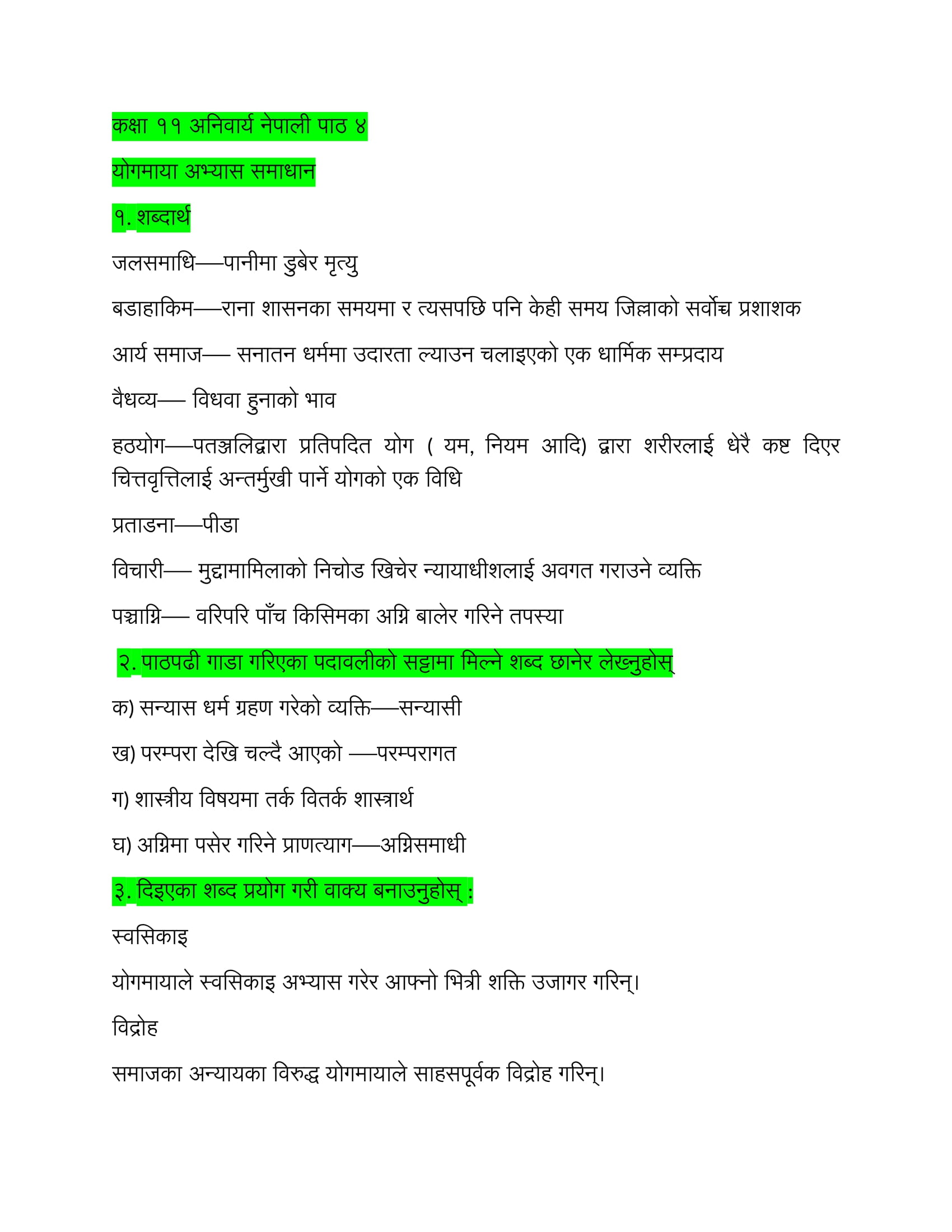
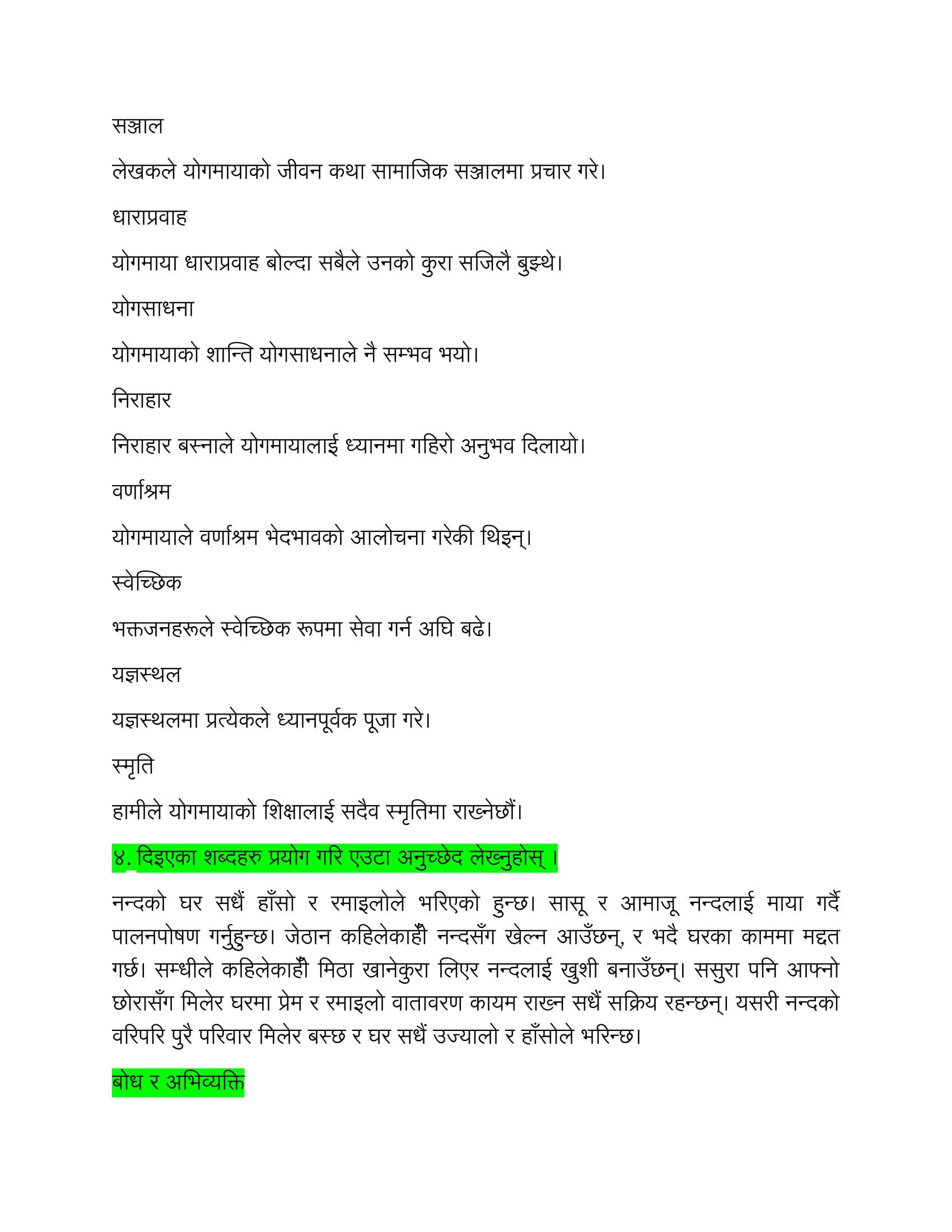
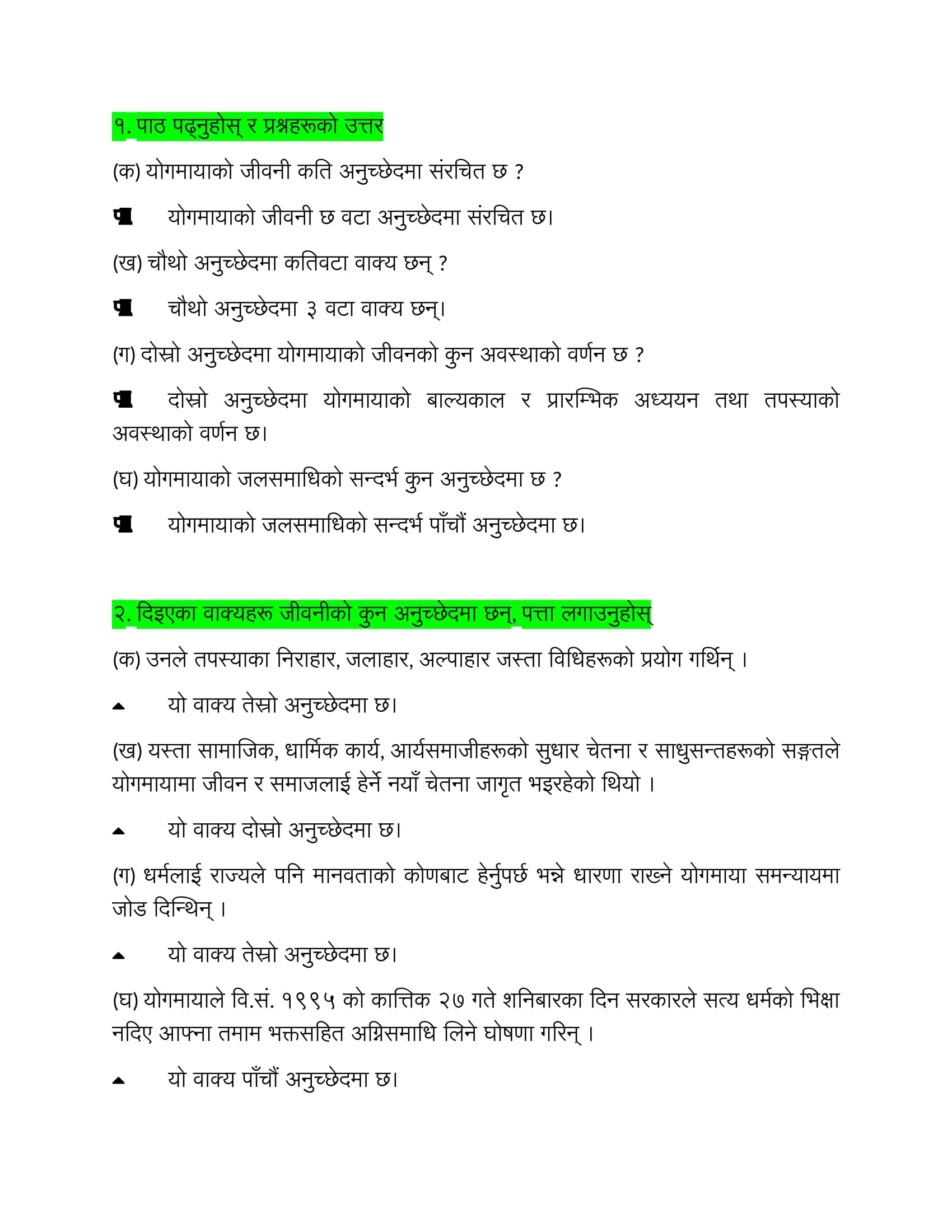
“Yogmaya – Class 11 Nepali, Chapter 4: Complete Solution” provides detailed answers, summaries, and explanations of all exercises from the chapter Yogmaya. This guide helps students understand the life, struggles, and contributions of Yogmaya Neupane, a revolutionary social reformer of Nepal. The complete solution includes word meanings, grammar, question–answers, and long/short interpretations, making it an essential study resource for Class 11 Nepali students.
The chapter Yogmaya introduces students to Yogmaya Neupane, a fearless social reformer and spiritual leader of early 20th century Nepal. She is portrayed as a visionary woman who challenged deeply rooted social, religious, and political injustices during a time when women were silenced and suppressed.
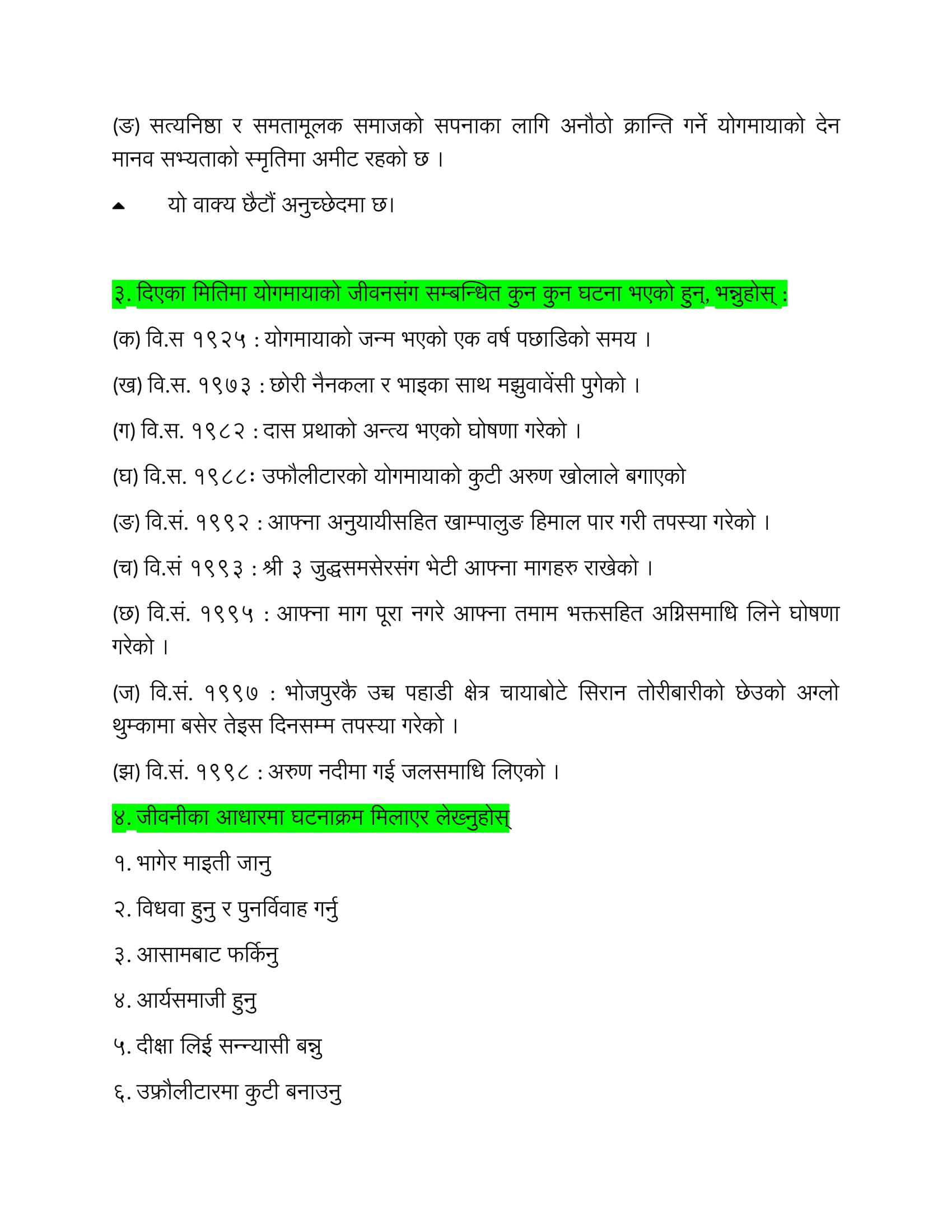
Yogmaya was born in Bhojpur district and faced hardships from an early age. As a young girl, she experienced domestic violence, forced marriage, and societal discrimination. These struggles shaped her resistance and determination to question injustice.
Her life took a turning point when she left behind her abusive household and began to pursue a spiritual path. Yogmaya embraced asceticism, devoted herself to meditation, and gathered followers who admired her courage and wisdom.
The chapter highlights her strong voice against corruption, caste-based discrimination, child marriage, polygamy, and women’s exploitation. At a time when very few dared to speak, she openly criticized both social evils and the feudal Rana rulers.
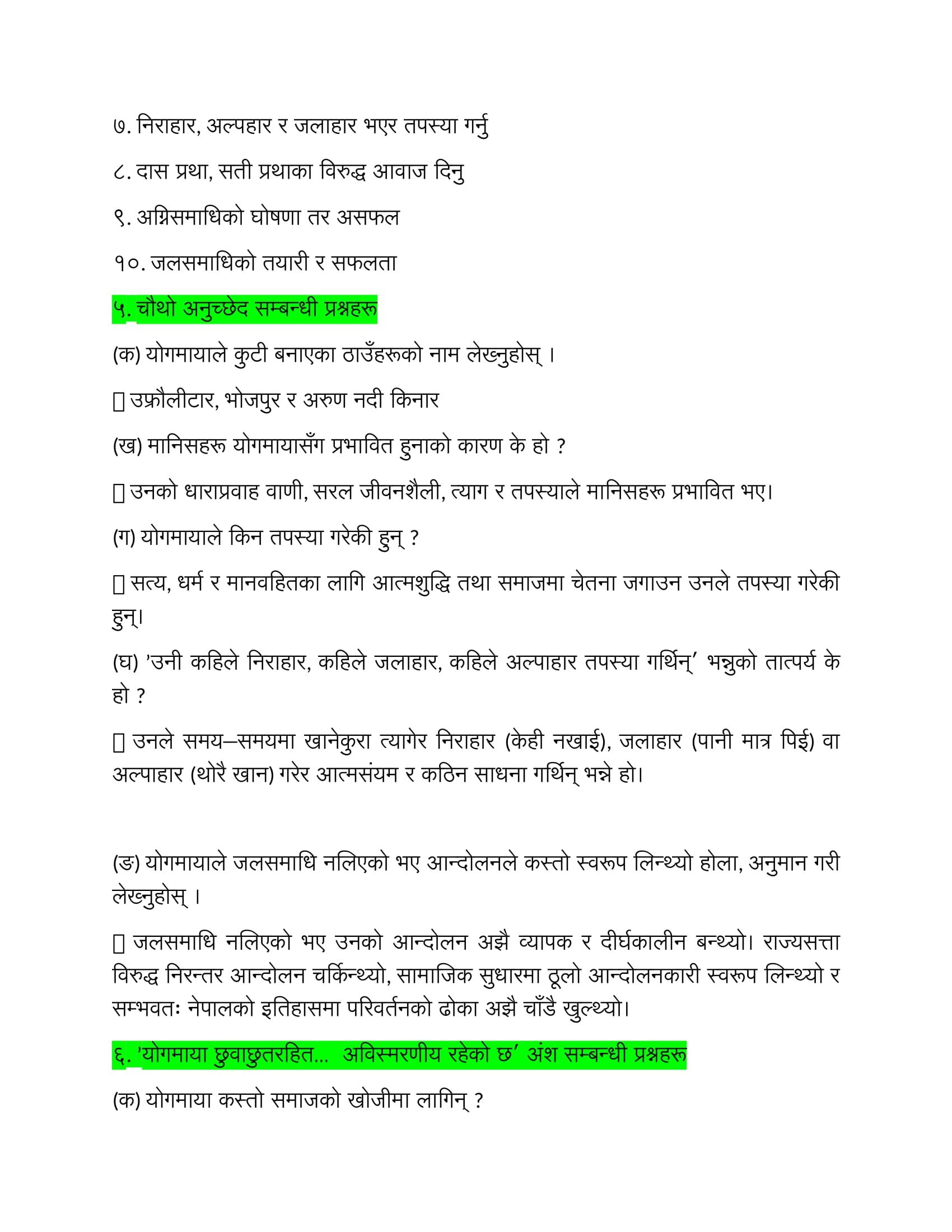
Yogmaya’s teaching centered on truth, justice, equality, and devotion to God. She believed religion should not be about blind rituals but about moral living and service to humanity. This attracted many women and marginalized people who had long been neglected by society.
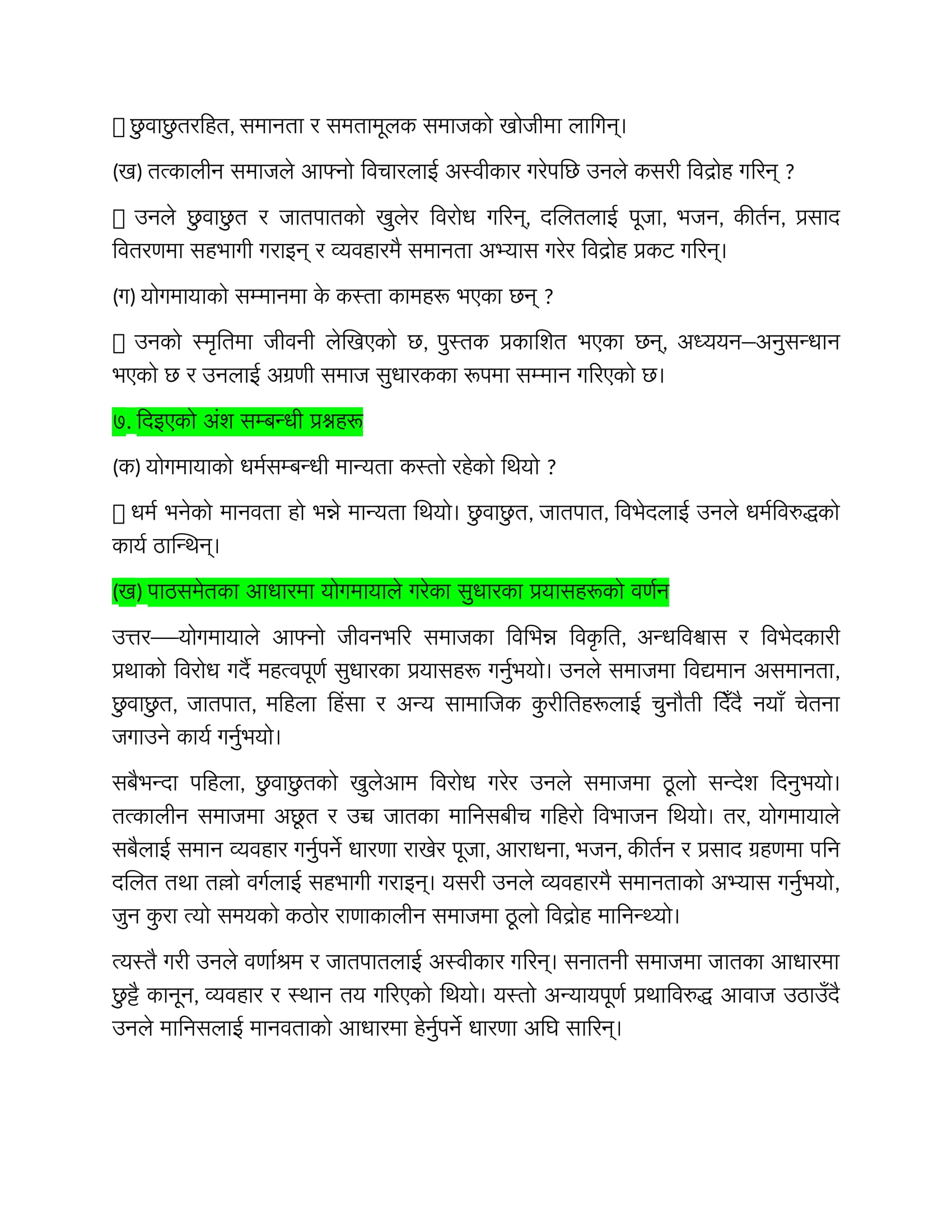
One of her most important contributions was leading a social movement against the oppressive Rana regime. She demanded justice, freedom, and fair governance. Through poems, songs, and speeches, she inspired ordinary people to resist tyranny.
Her movement, however, was not welcomed by the ruling class. The Ranas viewed her as a threat to their power. Instead of supporting reform, they tried to silence her voice, limit her influence, and prevent her followers from organizing.
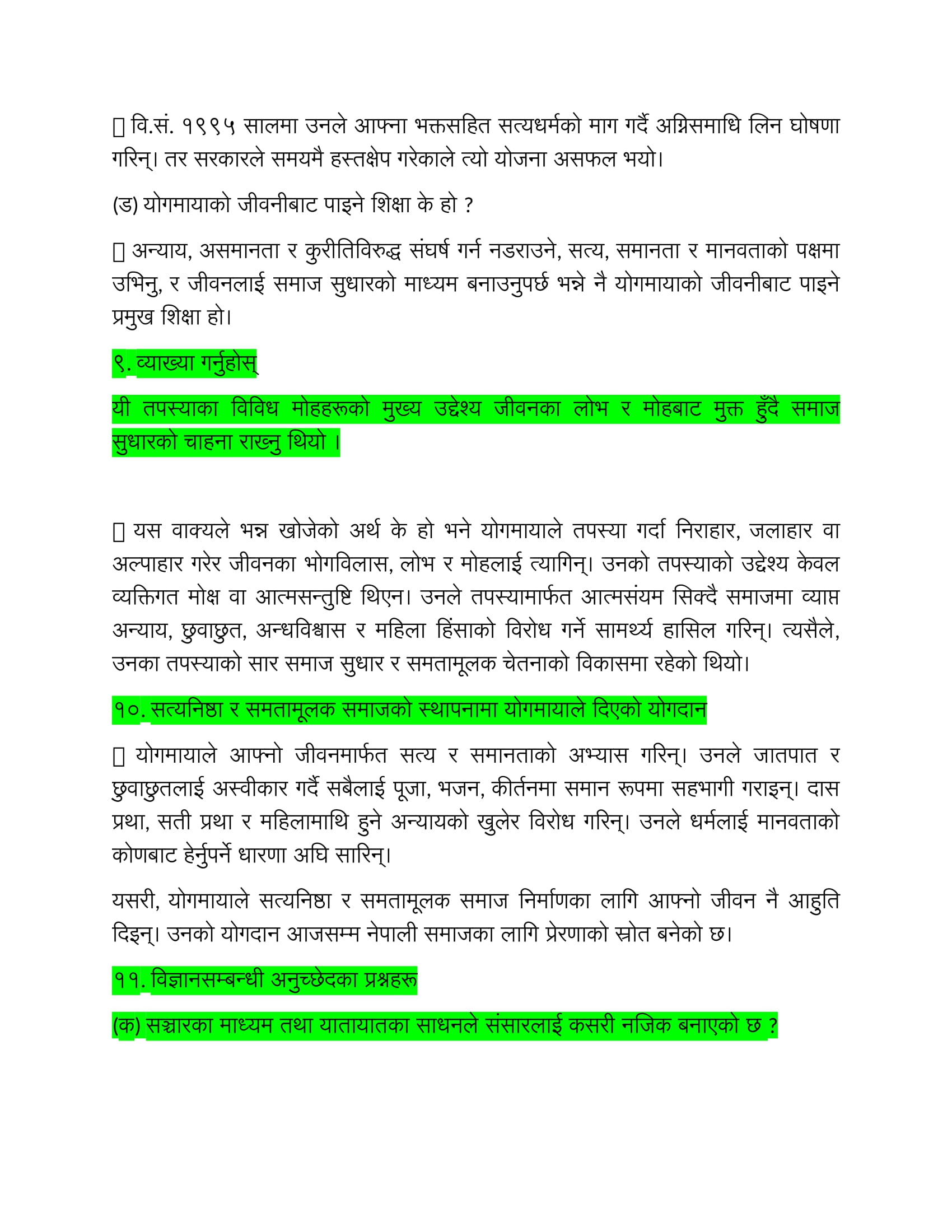
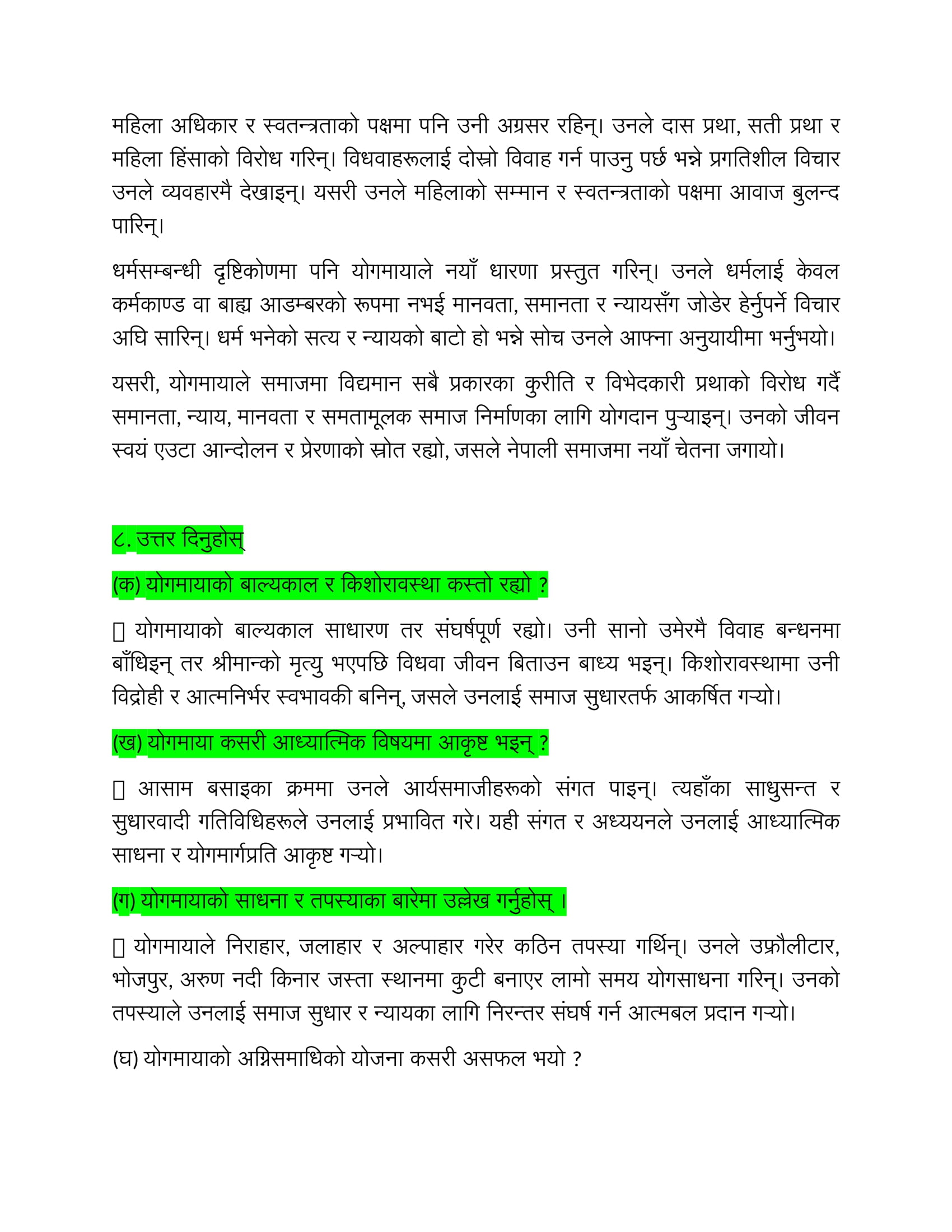
The climax of Yogmaya’s struggle came when she and her followers performed jal samadhi (self-immersion in the river) as a form of protest against injustice. This tragic yet powerful act reflected her ultimate sacrifice for truth and equality.
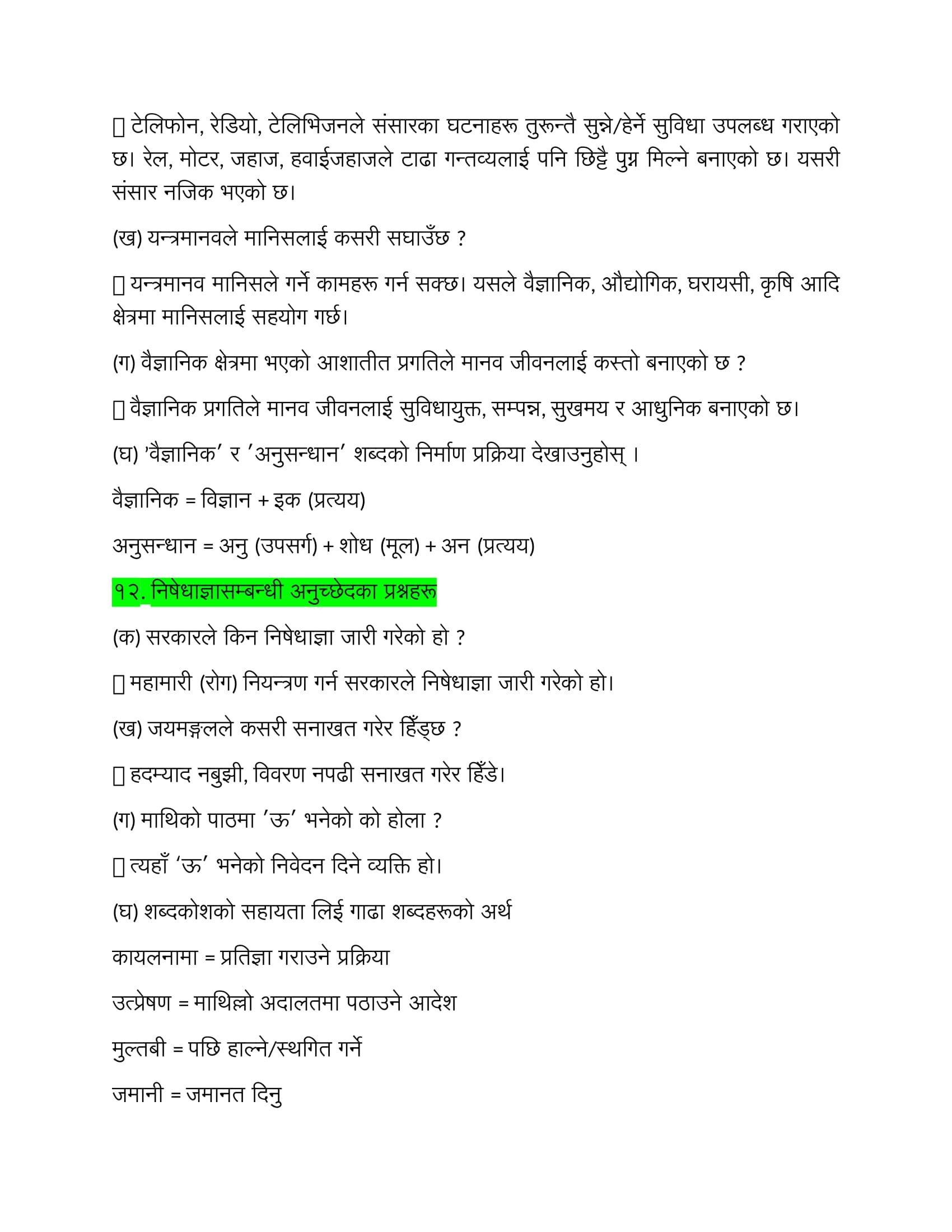
The chapter also emphasizes Yogmaya’s literary contributions. Her spiritual verses and reformist songs, full of poetic beauty and revolutionary spirit, are considered valuable works in Nepali literature and history. They continue to inspire readers to this day.
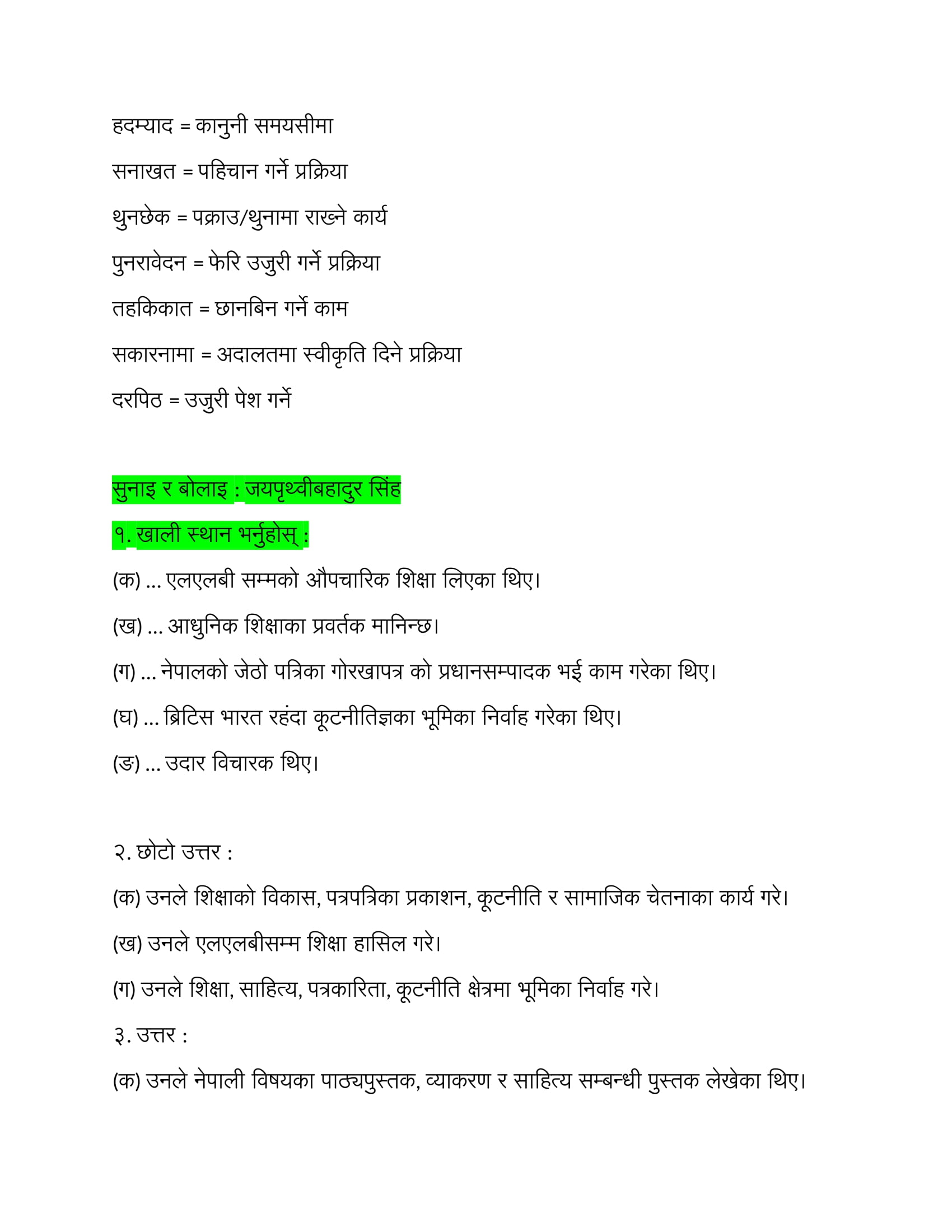
In conclusion, the chapter portrays Yogmaya Neupane as a brave reformer, spiritual teacher, and symbol of women’s resistance in Nepal. Her life is a reminder that real change comes through courage, sacrifice, and an unwavering commitment to justice.
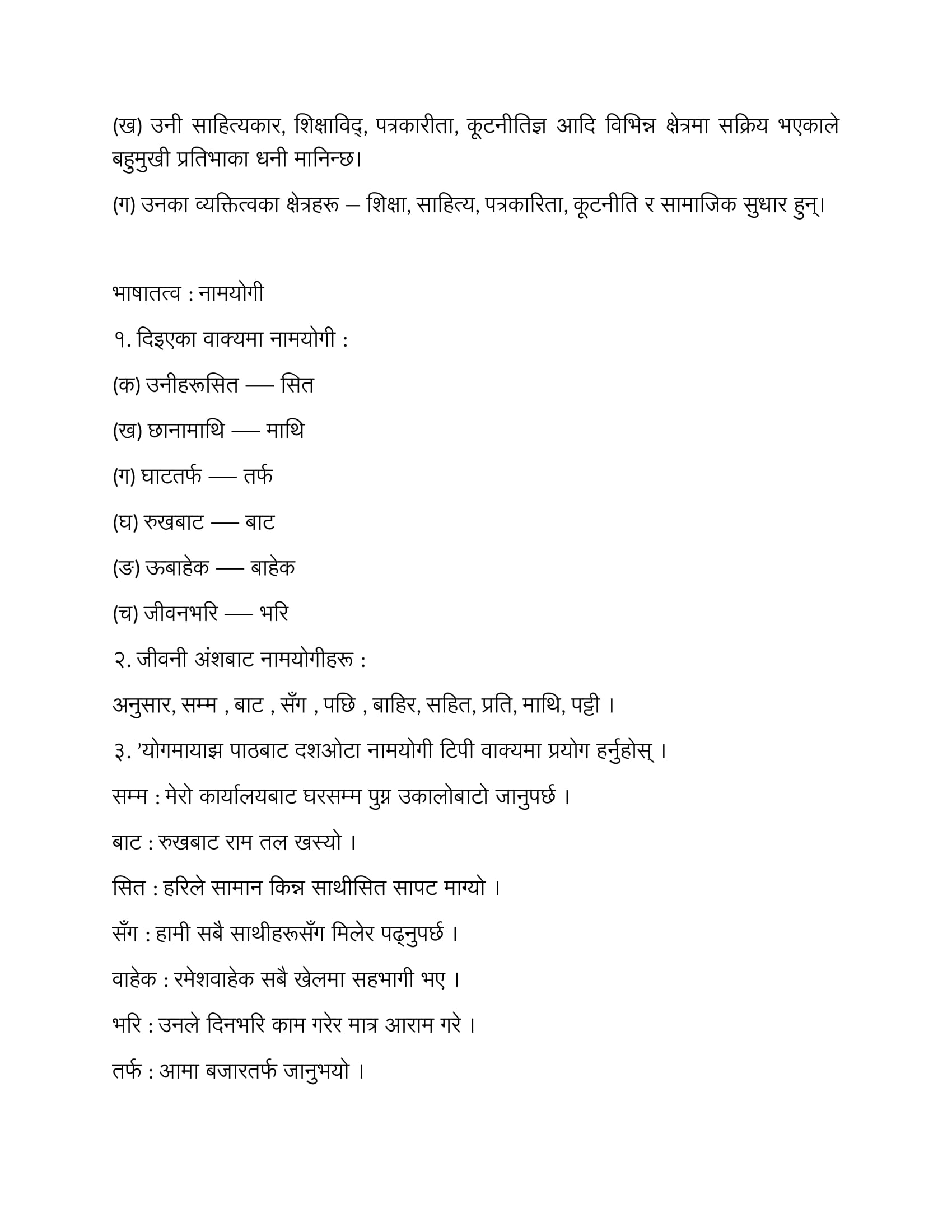
The life and struggle of Yogmaya Neupane carry a powerful message of courage and resistance. She teaches that no matter how oppressive the system may be, individuals must dare to speak the truth.
Yogmaya’s message emphasizes equality. She strongly opposed caste-based discrimination, untouchability, and gender inequality, showing that all human beings deserve respect and dignity.
She highlighted the importance of women’s empowerment. By challenging child marriage, polygamy, and domestic violence, she proved that women are not weak but capable of leading social change.
Her spiritual teachings remind us that religion should not be about blind rituals. Instead, true faith means honesty, justice, and service to humanity.
Yogmaya’s protest against the Rana regime gives the message that oppressive rulers cannot silence truth forever. Her life encourages people to stand up against exploitation and corruption.
Through her songs and poems, Yogmaya conveyed that literature can be a tool for revolution. Words have the power to awaken society and inspire people to fight for justice.
Her self-sacrifice in the form of jal samadhi symbolizes that real change demands courage, commitment, and sometimes even the ultimate price. It teaches us the value of dedication toward social reform.
In summary, the message of Yogmaya is clear: live truthfully, fight injustice, respect equality, and dedicate yourself to the welfare of others. Her legacy continues to inspire Nepali society to embrace justice and humanity.